Embedded Files
12 specimens tested with radio carbon dating... <40,000 yrs
https://newgeology.us/presentation48.html
Researchers have found a reason for the puzzling survival of soft tissue and DNA fragments in dinosaur bones - the bones are younger than anyone ever guessed. Carbon-14 (C-14) dating of multiple samples of bone from 8 dinosaurs found in Texas, Alaska, Colorado, and Montana revealed that they are only 22,000 to 39,000 years old....

View laboratory reports: UGAMS-11752,a UGAMS-9891,9893 UGAMS-8824 UGAMS-7509a/b
UGAMS-04973a UGAMS-02947 UGAMS-03228a,b GX-32678 UGAMS-01935/01936/01937 GX-32739
GX-32372 GX-32647 G. X-15155-A,-A-AMS AA-5786
When Triceratops and Hadrosaur bones from Montana were tested for Carbon 14 both Geochron Laboratories and University of Georgie Isotope Center examined the results independently and both said that the triceratops registered an average of 30,890 ± 380 radiocarbon years (RC) for the Triceratops and 23,170 ±170 RC years for the Hadrosaur which was obtained using the Accelerated Mass Spectrometer (AMS).
DR. WALTER LIBBY'S CARBON 14 TESTING - At different volcano sites, eleven samples were collected from eruptions that took place in 1949, 1954 and 1975. These samples were dated by Geochron Laboratories of Cambridge, Massachusetts.
The oldest of these samples are just over sixty-years old, the lab tests provided ages that ranged from 270,000 years to 3.5 million years old! Mt. St. Helens eruption of 1980, gave very old ages in the range of 300,000 to 2.7 million years.

Dinosaur Bones & some Petrified wood is Radioactive
Dinosaur Bones & some Petrified wood is Radioactive
NOTE: Did you know that MOST dinosaur bones discovered are highly radioactive. Because of this, the bones displayed in museums are covered with a heavy coat of lead paint to protect the public. The dinosaur bones will have a much higher level of radioactivity than the surrounding soil and rock that they're found in. This has been cited as evidence that the radiation in the dinosaur bones came from the water they were submerged in, and not from the sand, mud, and stone that the bones were deposited in.
Kevin Hadsall discusses how the fossil record and rock layers confirm the biblical account of Noah’s ark and flood.
"Can't pick up another rock, until you explain this one first..." --CKS

------- AND / OR -------
------- AND / OR -------
Ten perfectly preserved fossilized human skeletons were found in La Sal Utah, in the same Lower Cretaceous strata not far from where numerous dinosaur fossils have been found at Dinosaur National Monument, which has the world's largest concentration of Jurassic-age dinosaur bones. Human skeletons were found fifty-eight feet down in the Dakota Sandstone. At least four of the individuals were female, one was an infant, and five were men. The amazing thing is that some of the fossils were articulated or found in their natural body positions, indicating they were quickly buried by some sort of catastrophic flood or mudslide. They named these ten prehistoric people Malachite Man because some of their bones when they fossilized turned to turquoise during the fossilization process... accademia says "no"


Human leg bones and teeth that have turned to turquoise.


------- AND / OR -------
------- AND / OR -------

CONGRESSIONAL RECORD MONDAY OCT 26, 1987 Vol 133 No. 168
HON. Paul E. KANJORSKI of Pennsylvania Tuesday, October 27, 1987
PETRIFIED HUMAN BONES FOUND IN COAL BED
These bones are on exhibit in the Greater Hazleton Historical Society Museum.
It is only a small sign neatly dressed in a frame and its message is not only short and sweet but also loud and clear: "This is the only museum in the world where petrified human bones found between coal veins are on display"
Not only did they find petrified human bones between coal veins of anthracite; anyone who doubts that humans are as old as or older than coal, which evolutionists falsely claim is 250 million years old. They simply need to look at the specimens of petrified human bone embedded in slate, which they also have on display in the Museum.
In 1862 the skeleton of a man was found in a coal seam in Macoupin county, Illinois
In 1862 the skeleton of a man was found in a coal seam in Macoupin county, Illinois
“In Macoupin County, Illinois, the bones of a man were found on a coal-bed capped with two feet of slate rock, ninety feet below the surface of the earth. . . The bones were covered with a crust or coating of hard glossy matter, as black as coal itself, but when scraped away left the bones white and natural.”
A letter from the State Geological Survey of the Illinois Department of Energy and Natural Resources states that the coal was formed 287 million to 320 million years ago.
British Museum of Natural History
Several skeletons encased in limestone were discovered in 1805 near Moule on the island of Guadeloupe. A 5 ft 2-inch skeleton of a female was taken (still encased in a 2-ton limestone block) to the British Museum of Natural History, where it was on display for 50 years. Today, that skeleton is being housed in the basement of the British Museum
Scientists from five respected laboratories found significant quantities of Carbon-14 in the coal, oil, limestone, fossil wood, fossil graphite, natural gas, marble, and the dinosaur fossils, as well as in the diamonds, it is proof that the Carbon 14 found in the dinosaur bones is not a result of contamination. Also, the age of the oil and natural gas found in the same strata as the dinosaur bones can be determined, which is made from the decay of the trees and vegetation in the surrounding area, which is on the order of thousands of years old, not millions.
The diamonds provide a constraint, ruling out the likelihood of contamination as a primary source for the modern carbon in other similarly-dated specimens.
The inventor of the radiocarbon dating method, Dr. Walter Libby, stated in the journal Science, "There is no known natural mechanism by which collagen may be altered to yield a false age." And as of 2013, there is still no known mechanism to contaminate collagen with modern carbon.
If a specimen is purified to 95% collagen, or 98%, or 99%, etc., then approximately the same percent of the carbon in the fossil sample will be endogenous (original to the living animal). Why? Because new carbon atoms will not replace original carbon atoms in the collagen molecule. As a result of decomposition, to the extent that original carbon atoms were falling out of the tissue (so to speak), then to that extent you would no longer have collagen; rather, to that extent, you would have humic acid. Decomposing collagen cannot be "repaired" by free carbon atoms happening upon the decomposition. Rather, the collagen must be manufactured within a living animal (with its constituent carbon atoms) into a “super-super-coil… interdigitated with its neighboring microfibrils... so well ordered as to be crystalline." Further, bacteria do not make collagen, which eliminates another possible source of contamination.
In 1923 a Russian explorer Prof. Peter Kozloff called Mongolia the "paleontological Garden of Eden." He discovered an enormous number of skeletons of prehistoric animals, birds, and many humans remains, which led him to believe that Mongolia may have been the birthplace of man, the point of origin of a considerable part of the animal and reptile world. Enormous quantities of extinct creatures, including more than 1,000 insects of giant size, in association with human remains.


Podcast: 1947 Waldemar Julsrud published a booklet on his discoveries called Enigmas del Pasado (Enigmas of the Past) - documenting what have come to be know as the 'the Acámbaro figurines" - now housed in the Waldemar Julsrud Museum in Acámbaro, Guanajuato, Mexico - This collection has many different species of dinosaurs including duck-billed Trachodon, Gorgosaurus, horned Monoclonius, Ornitholestes, Titanosaurus, Triceratops, Stegosaurus Paleococincus, Diplodocus, Struthiomimus, Plesiosaur, Maiasaura, Rhamphorynchus, Iguanodon, Brachiosaurus, and several as of yet "unidentified" Dinosaur species.


1953 Mexico sends four archaeologists from the Instituto Nacional de Antropología e Historia – also called INAH – in Mexico City to investigate. They set up a dig site about a mile from Julsrud’s original discovery location.
They dug a test plot going about 2 meters down and discovered dozens of figurines similar to Julsrud’s, including dinosaurs. INAH then issued a statement that the figurines did correspond to the pre-Classic civilization of the Chupicuaro and could date to as early as 800 BC, ...but not the dinosaurs.
INAH gave no further explination, and to date has refused to issue permits for any other archaeologists to make new excavations.

One huge Dinosaur graveyard bed in Montana, called Egg Mountain contains ten thousand Hadrosaurs. CATACLYSMIC BURIAL, JOHN R. HORNER, "...there were 30 million fossil fragments in that area. At a conservative estimate, we had discovered the tomb of 10,000 dinosaurs ...there was a flood. This was no ordinary spring flood from one of the streams in the area but a catastrophic inundation. ... That's our best explanation. It seems to make the most sense, and on the basis of it we believe that this was a living, breathing group of dinosaurs destroyed in one catastrophic moment." DIGGING DINOSAURS, 1988, p.131
One of the world's largest dinosaur graveyards has been discovered in Alberta, Canada. This massive dinosaur bone bed is 1.43-square miles in size. Scientists say that it contains thousands of bones belonging to the dinosaur Centrosaurus. Centrosaurus was a plant-eater, cow-sized dinosaur, with its top-of-the-head frills and rhino-like nose horn.
In Zurich Switzerland, they found over 100 or more Plateosaurus, one animal about every 100 square meters apart.
1968, Charles Hapgood (Harvard-trained archaeologist and friend of Perry Mason creator Erle Stanley Gardner. Hapgood had years of experience and the academic credentials to analyze the Julsrud collection) submitted three samples to Isotopes Incorporated of New Jersey for radiocarbon dating.
The first sample came back as three thousand five hundred and ninety years old, plus or minus 100 years.
The second sample came up as six thousand four hundred and eighty years old, plus or minus one hundred and seventy years.
The third sample came up with a date of three thousand and sixty years old, plus or minus one hundred and twenty years.
To be thorough, Hapgood also submitted four samples to the University of Pennsylvania Museum for thermoluminescent dating, a more accurate way to date pottery. All four samples came up with a date of 2,500 BC, plus or minus one hundred and ninety years. Dr. Froelich Rainey, realizing the importance of accuracy in the dating of these pieces did 18 runs on each of the 4 samples and came up with the same results. (src - http://mexicounexplained.com/ancient-dinosaur-figurines-acambaro/ )
Ancient Footprints: https://youtu.be/ULW76HlxjXA & https://youtu.be/tHFFMyBb1O8
But wait... There's more!
The Ica Stones
The Ica Stones
A collection of more than 15,000 engraved stones which curiously depict clear and detailed dinosaurs, complex medical surgery, and forms of advanced technology such as telescopes. The stones that have drawn the most attention are those that depict different species of dinosaurs, as well as those that show advanced technology and medical practices that were unknown at the time they were found, such as a caesarean section with acupuncture used as a form of anaesthesia, and heart transplants. (see video)

In 1966, Peruvian physician Javier Cabrera Darquea was given a stone for his birthday that had a carved picture of an extinct fish. This perked his interest, and Cabrera began collecting more of the stones from two brothers and a farmer named Basilio Uschuya, who claimed he found a huge cache of the stones when the Ica River overflowed its banks destroying a nearby mountain and exposing an unknown cave. They sold Cabrera more than 11,000 stones by the 1970s.
In 1967, Dr. Cabrera picked 33 stones out of his collection and sent them to Maurico Hochshild Mining Company in Lima, Peru to be examined for age, and test to see if they had been recently carved by grave-robbers who were accused of carving them just to make extra money. Eric Wolf, a geologist who worked at the MHMC laboratory sent back his signed analysis which read:
"The stones are covered with a fine patina of natural oxidation which also covers the grooves, by which age should be able to be deduced."
The BBC produced a documentary on the discovery bringing an extraordinary amount of focus on the Peruvian Government. Under pressure to police the country's antiquities, the Government arrested the farmer for selling the stones. Facing years of incarceration, the farmer recanted his story claiming he'd carved all 15,000 of the stones himself. He even demonstrated how he engraved the stones using a dental drill.... However, later Uschuya himself recanted his forging story during an interview with a journalist, saying that he claimed they were a hoax to avoid jail... pointing out the fact that he had no access to a dental drill and that he would have had to carve one stone every day for over 40 years to produce the total number of stones he sold Cabrera.
Additionally, Archaeologist Alejandro Pezzia Assereto, a trustee of the Ica Regional Museum, found engraved stones within three different tombs dating from 400 BC to 700 AD. The engraved images on the stones resemble those found on the Ica stones sold by Uschuya. In 1968 Assereto published his findings, including drawings and descriptions.
An Indian pictograph found in the Havasupai Canyon in the Grand Canyon shows men hunting dinosaurs...

January of 2006, Drs. Patton journeyed to Cambodia to the temple monastery, Ta Prohm. The temple was built by Jayavarman VII in honor of his mother and dedicated in 1186 A.D. The walls of the monastery were decorated with all kinds of animals, one of which was a creature that closely resembles a stegosaurus.

“Along the vertical strip of roundels in the angle between the south wall of the porch and the east wall of the main body of the gopura there is even a very convincing representation of a stegosaur.”
The evolutionary paradigm has prevented many people from reaching the conclusion that dinosaurs (etc.) did not die out millions and millions of years ago – in spite of continual discoveries of living species thought to have died out millions of years ago. In 1938, a fish, the Coelacanth, which was believed to have died out with the dinosaurs, was discovered as still living. Keith S. Thomson, Executive Officer, Academy of Natural Sciences states that:
Off the coast of southern Africa, in the winter of 1938, a fishing boat called The Nerine dragged from the Indian Ocean near the Chalumna River a fish thought to be extinct for 70 million years. The fish was a coelacanth, an animal that thrived concurrently with dinosaurs. The Dawn Redwood that it was also thought to be extinct worldwide until living specimens were found in central China in 1945. Then, in 1994 article entitled: Newfound Pine Goes Back in Time – It was Believed to be Extinct. David Noble was out on a holiday hike when he stepped off the beaten path and into the prehistoric age. Venturing into an isolated grove in a rain-forest preserve 125 miles from Sydney, the Parks and Wildlife Service officer suddenly found himself in a real-life ‘Jurassic Park’-standing amid trees thought to have disappeared 150 million years ago. “The discovery is the equivalent of finding a small dinosaur still alive on Earth,” said Carrick Chambers, director of the Royal Botanic Gardens.
In short, both Fish and trees thought to have coexisted (and died out) with the dinosaurs have been found to still exist...


In Glen Rose Texas, there are Giant man tracks alongside dinosaur tracks that were left behind in prehistoric mud that have turned into solid stone all along the entire length of the Paluxy River.

However, the longest Dinosaur trails are found on the Turkmenian plateau in Turkey, where there are over three thousand dinosaur tracks and human footprints found together, and over 65 different species of dinosaurs. The fact that human and dinosaur footprints have been found next to each other at 2 or 3 different sites is a smashing blow to evolutionism...
In 1983, researchers reported in the science and engineering news section of The Moscow News, that they had discovered what appeared to be a human footprint in 150-million-year-old Jurassic rock next to a giant three-toed dinosaur footprint. The article stated: "This spring, an expedition from the Institute of Geology of the TurkmenSSR Academy of Sciences found over 1,500 tracks left by dinosaurs in the mountains in the southeast of the Republic [Turkmen Republic—BH/BT]. Impressions resembling in shape a human footprint were discovered next to the tracks of prehistoric animals (see “Tracking Dinosaurs,” 1983, 24:10).
It appears that the Maya visited the Museum of Natural History in Washington DC ... or they
It appears that the Maya visited the Museum of Natural History in Washington DC ... or they
saw some real ones
saw some real ones


Posted by Pearl Lau from Palenque. => Friday, July 13, 2012
"Elephant glyph? No, no elephants in Mexico...ever. But 19th century epigraphers read it as such"

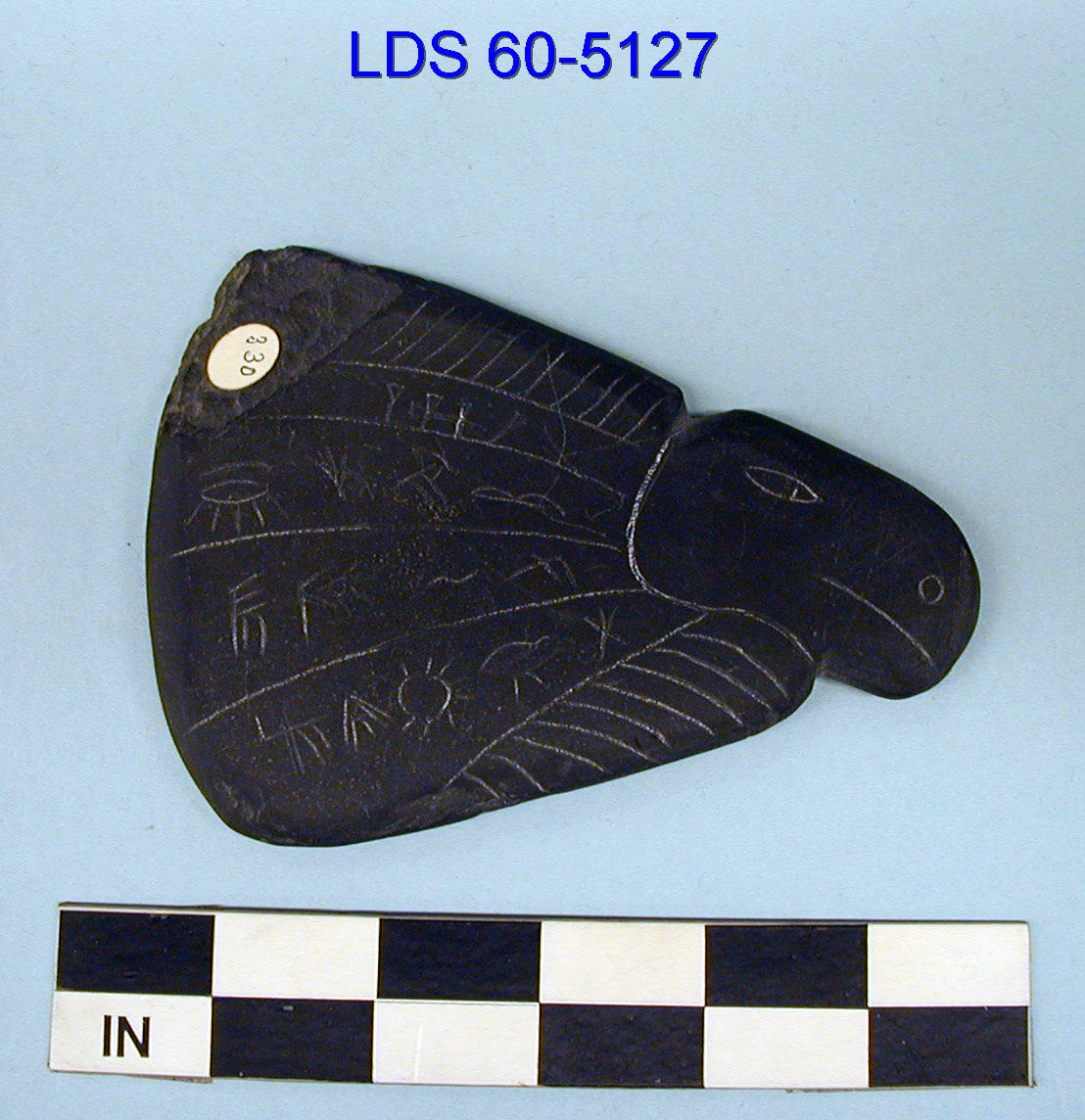
Image 267 - LDS Michigan Relics

Image: 8899a
File date: 2005-08-17
Caption: Teotihuacan Mural
Description: Teotihuacan. Atetelco. Jaguar mural
Next to Tri-ceratops? =>

Actually, "pre historic" critters also Appear in Israel...
Actually, "pre historic" critters also Appear in Israel...


In Israel, there is an ancient Roman town in the Golan Heights where there is a Jewish synagogue called Umm El-Kanatir. It was inhabited between 400-749 AD until it was destroyed by a major earthquake. As they were excavating in 2003 they found a stone carving at the base of one of the pillars, appears to depict two Dinosaurs, one attacking a horse...
These two dinosaurs Cryolophosaurus and Dilophosaurus were known as crested theropod dinosaurs. Theropod dinosaurs were bi-pedal with two small arms that they held close to their chests. They, like the T- Rex were fearsome meat-eaters.
In Australia...
In Australia...

Plesiosaur-like creatures seen by the Kuku Yalanji tribespeople, North Queensland, in Australia. The painting depicts a creature with features remarkably similar to a Plesiosaur. It even shows an outline of the gastrointestinal tract, indicating that these animals had been hunted and butchered.
Dr. Carl Werner and his wife spent 17 years traveling to museums and Dinosaur dig sites around the globe photographing thousands of original fossils and the fossil layers in which they were found. His research shows that plants and animals have remained the same for millions of years.
Dr. Carl Werner and his wife went to all the major Museums and Dinosaur dig sites around the world and photographed their fossil collections. They went to over 60 Museums and took over 60,000 photographs, and what Dr.Werner and his wife discovered is simply profound.
At the Dinosaur dig sites, they found fossils of modern animals from every major animal species buried with the Dinosaurs, and the animals look the same as the animals we have today. And not only did they find this to be true for the animals but for all the major plant divisions living today. All the plants, animals, reptiles, and birds we see today were living at the time of the Dinosaurs. For example, the Dinosaur beds in the Morrison Formation at Dinosaur National Monument contain fish, clams, snails, mussels, as well as birds, mammals, and various dinosaurs.
However, although Paleontologists have found 432 different mammal species buried along with the Dinosaurs, yet none of these mammals skeletons which lived at the same time as the Dinosaurs have ever been displayed in any of the museums.
In Russia...
In Russia...

Soft Tissue....
Soft Tissue....
Over the past several years there have been over 20 cases of original soft tissues found in fossilized Dinosaur remains around the world. Harvard Medical School found clear collagen signatures in Schweitzer’s dinosaur tissues and placed the data online so that anyone could access it. Researchers from Palo Alto reanalyzed the data and published their report online in the Journal of Proteome Research. Publishing the results in Science Journal in 1994, Schweitzer recalls: "I got goosebumps," "It was exactly like looking at a slice of modern bone. But, of course, I couldn't believe it. I said to the lab technician: 'The bones, after all, are 65 million years old. How could blood cells survive that long?' Mary Schweitzer, Montana State. Museum of the Rockies, Science 261:160. July 9. 1994.

Scientists were scratching their heads in amazement over this latest find. This time they found another “mummified” dinosaur near Malta, Montana. More than 80 percent of this duck-billed dinosaur’s skin and muscles are intact.

A team of researchers using special equipment at the MAX-lab in Lund, Sweden, has applied more than six different techniques to verify that tissues from inside a Cretaceous mosasaur humerus bone, which was kept in the Royal Institute of Natural Sciences of Belgium "for many years," consist of mosasaur and not microbial molecules. One of those analyses was carbon dating.
Using transmission electron microscopy, the investigators found that the fibers looked like recent bone proteins. Since the concept of being able to look at 65 million-year-old flesh sounds so fanciful, many Scientists have suggested that biological material in the fossils came from bacteria instead of being original tissue. Much of the recent studies and investigations, therefore, focused on testing whether or not that was the case with these soft tissues. But the long, stringy fibers that they photograph look nothing like bacteria or bacterial colonies.
THE LA BREA TAR PITS
The La Brea Tar Pits in California is a mass grave of over a million animals. The different layers of the tar pits read like a book of ancient times when animals abounded that we would have never thought were indigenous to America at all. Mammoths, elephants, rhinoceros, giant sloths, saber-tooth tigers, horses, camels, etc;
In recent radiocarbon (RC) dating done by Dr. Walter Libby's team, on collagen that they took from "dense mid-shaft femur bones" of twelve extinct saber-tooth tigers, [Smilodon] from the La Brea Tar Pits of Los Angeles CA.2 The RC ages for extracted bone collagen for Smilodon femurs ranged from 12,650 ±160 to 28,000 ±1400 RC years BP (Before the Present). According to Dr. Libby, the inventor of the radiocarbon dating method, "There is no known natural mechanism by which collagen may be altered to yield a false age."
Other
Other
The K-T boundary is the point in between the Cretaceous and Tertiary periods. The K-T boundary separates the age of reptiles and the age of mammals; below this line is where you will find all the Dinosaur fossils, and above this line, you will find none!


In 1974, Flavio Barbiero, an engineer and explorer, theorized that shifting of the Earth's axis took place 11,000 years ago and caused what was subsequently recorded in myth as the destruction of Atlantis and Mu.
One of the most fascinating Dinosaur fossil graveyards of all is located in the southern United States. The Ashley Beds is an enormous phosphate the graveyard that contains mixed remains of men with land and sea animals, notably the dinosaurs, plesiosaurs, whales, sharks, rhinos, horses, mastodons, mammoths, porpoises, elephants, deer, pigs, dogs, and sheep. A catalog of fossils from the phosphate beds is given in the records of Major Edward Willis who displayed them at multiple expositions (Willis, “Fossils and Phosphate Specimens,” 1881.)
Professor F.S. Holmes (paleontologist and curator of the College of Charleston’s Natural History Museum) described the fossil graveyard in a report to the Academy of Natural Sciences: “Remains of the hog, the horse and other animals of recent date, together with human bones mingled with the bones of the mastodon and extinct gigantic lizards.” There can be little doubt what extinct gigantic lizard he referenced for he pictured a hadrosaurus on the front of his 1870 book The Phosphate Rocks of South Carolina and captioned it: “Skeleton of a Fossil Lizard eighteen feet in Length.”
Moreover, on page 31 he wrote, “It was in this Post-Pleiocene age, the period when the American Elephant, or Mammoth, the Mastodon, Rhinoceros, Megathereum, Hadrosaurus, and other gigantic quadrupeds roamed the Carolina forests, and repaired periodically to these Salt-lakes”… (p. 31.) The mixing of these remains was pell-mell throughout the roughly 40 square mile area of this deposit around Charleston, South Carolina. By one estimate, bones made up 65% of the extraordinary phosphate deposits in the region of the Ashley River basin before it was largely mined out. (Keener, J.C., The Garden of Eden and the Flood, 1901, p. 244.)

In his book How Shall We Escape (1904) French Oliver describes the fossils of Ashley, saying on page 177, "Major E. Willis of Charleston, S.C., sent me a cordial invitation to visit the Charleston Exposition and see the 'finest collection of fossils in the world.' He sent me a list of fossils and phosphate specimens, also a number of the fossilized bones... The fossils of Ashley, S.C., are remarkable in their vast scope of species. Ranging from the common periwinkle to the mammoth, mastodon and megatherium. And the mystery of man's longevity clears as we find his bones among the number. The individuality of the species is absolute..."

Another massive repository of fossils is found in South Africa. We can only speculate how many creatures are contained in this graveyard. One mind-boggling analysis estimates “The Karoo formation in South Africa alone contains fossil remains of about 800 billion animals.” (Milner, Richard, The Encyclopedia of Evolution: Humanity’s Search for Its Origins, 1990, p. 330.)


Sources:
https://charlestoncurrents.com/2015/06/history-ever-wonder-why-its-called-ashley-phosphate-road/
https://coastalpaleo.blogspot.com/2018/05/the-ashley-phosphate-beds.html
https://www.smithsonianmag.com/science-nature/dinosaur-shocker-115306469/
https://www.cnn.com/videos/style/2020/12/11/rock-paintings-giant-animals-amazon-orig-jk.cnn


Google Sites
Report abuse