Embedded Files
Module 4
Learning Objectives
Learning Objectives
Students will be able to describe some of the traditional First Peoples have used plants and trees (medicine, food, materials for building and creating).
Students will be able to name and identify some local plants and trees.
Students will understand how to gather plants in a safe and sustainable way.
Students will understand the shared responsibility of caring for plants and trees in the environment.
Materials Needed
Materials Needed
For all activities you will need:
A technological device such as a desktop computer, a laptop, a tablet, or a smartphone and access to Wi-fi
A Gmail account
For Activity 2 and Activity 5:
A handheld device (or camera) to take photos while outside
The app "Seek" by iNaturalist
Activity 3:
A glass jar, cup, or vase.
Water
A safe place to pick dandelions
Activity 4:
Flour, salt, cream of tartar, and vegetable oil (playdough ingredients)
A large mixing bowl
Boiling water
A bouquet of dandelions
Printer (optional)
Activity 6:
Plain paper
Drawing materials (pencil, crayons, markers, or pencil crayons)
Bonus Materials:
A free Epic! account to access digital books
Task A
Task A
Know-Wonder-Learn
Know-Wonder-Learn
Before you begin this module about traditional uses for plants, go to our KWL Padlet and share:
(K) What do you already KNOW?
(W) What do you WONDER?
Click the + button to respond. You can add words, pictures, a video, and/or a drawing.
Complete first before you start any activity!
Introduction
Introduction
Are you ready to learn about the traditional ways First Peoples use plants and trees?
Let's do the activities below!
Activity 1
Activity 1
To-Do List:
To-Do List:
Watch the video below: RAVEN'S QUEST - Chyyah.
With the help of an adult, find out the name of the First Peoples community whose land you live on using this website: native-land.ca
Draw a picture and/or write to answer one of the Guiding Questions listed below.
You can share your answer on the Padlet under "Sharing Circle".
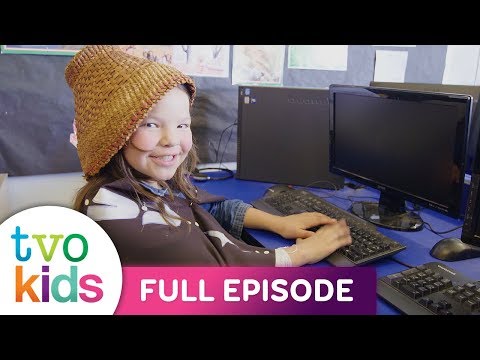
Raven's Quest - Chyyah (TVOKids, 2018)
Raven's Quest - Chyyah (TVOKids, 2018)
Guiding Questions:
Guiding Questions:
Chyyah is from the Nuu-Chah-Nulth Nation in Port Alberni, British Columbia. What is the name of the First Peoples community where you live?
The Nuu-Chah-Nulth Nation have been using (and learning about) plants and trees for thousands of years. What are some of the traditional ways that Chyyah and her family, or community use plants and trees?
Activity 2
Activity 2
Materials:
Materials:
Handheld device (phone, tablet, or camera) for taking photos.
Download the "Seek" by iNaturalist plant identification app (Optional).
To-Do List:
To-Do List:
Watch the videos below: Tla'ook Adventures Forest Tour and/or Read-aloud with Alison Farrell, author of "The Hike".
Complete the "Wild Plants vs. Garden Plants" sorting activity.
Go on a nature walk or a hike with an adult to complete the "Nature Scavenger Hunt" (see below for instructions).
Ask an adult to help you identify and name the plants and trees, if needed use the app "Seek" by iNaturalist.
Post pictures of the plants and trees that you found and identified on your class Padlet called "Nature Scavenger Hunt". Let's see how many different plants and trees we can find!
Tla'ook Adventures (Indigenous Tourism BC, 2010)
Tla'ook Adventures (Indigenous Tourism BC, 2010)
The Hike by Alison Farrell (Burlingame Public Library, 2020)
The Hike by Alison Farrell (Burlingame Public Library, 2020)
Wild Plants vs. Garden Plants Sort
Wild Plants vs. Garden Plants Sort
Wild plants grow on their own in an area without anyone needing to plant them. Garden plants need someone to plant them to grow. Do any of the wild plants shown in the videos or sort grow where you live?
Nature Scavenger Hunt - Instructions:
Nature Scavenger Hunt - Instructions:
Go on a nature walk or hike with a grown-up. What wild plants and trees can you find on your nature walk or hike? How do you know they are wild and not garden plants?
Take photos or videos of any of the interesting plants or trees that you find and find out their names by asking an adult or using the app "Seek" by iNaturalist app (see below).
Post your plant and tree discoveries on the "Nature Scavenger Hunt" Padlet to share with your classmates.
Nature Identification App (iNaturalist, 2020)
Nature Identification App (iNaturalist, 2020)
Teachers/Parents/Caregivers:
Teachers/Parents/Caregivers:
Seek by iNaturalist is a very simple to use app that allows you to identify wild plants, trees, and insects with your phone or tablet's camera. It can be used in real time by taking a photo while you are outside, or you can upload photos after your walk or hike.
Activity 3
Activity 3
Materials:
Materials:
A glass jar, cup, or vase.
Water
A safe place to pick dandelions
To-Do List:
To-Do List:
Watch the videos below: A Day with Yayah by Nicola I. Campbell and Indigenous Plant Healing - Island Health.
Play the "Dandelion Matching Game".
Gather your own bouquet of dandelions (you will need the dandelions for Activity 5).
Record a video and share your dandelion bouquet with your class on Padlet under "Sharing Circle". In your video, explain at least one important rule that you will follow before you gather any plants in nature.
A Day with Yayah by Nicola I. Campbell (Ms. Craig's Corner, 2020)
A Day with Yayah by Nicola I. Campbell (Ms. Craig's Corner, 2020)
It is special to get the opportunity to learn about plants and trees from Elders or Knowledge Keepers. There are wild plants and mushrooms that are dangerous to touch and poisonous, while other wild plants are safe to touch and even edible. Edible means to safe to eat.
Guiding Questions:
Guiding Questions:
How does Nikki know if a plant is safe to touch or eat?
Who should you check with before picking any plants that you find in nature?
Indigenous Plant Healing (Island Health, 2014)
Indigenous Plant Healing (Island Health, 2014)
Guiding Questions:
Guiding Questions:
What is a gatherer?
What do you think would happen if someone picked all of the plants in the forest or cut down all of the trees?
Dandelion Matching Game
Dandelion Matching Game
Gather a Dandelion Bouquet Instructions:
Gather a Dandelion Bouquet Instructions:
Ask a grown-up to help you find a safe place to pick dandelions outside (free from herbicides or pesticides).
Pick a big bouquet of dandelions to bring home (at least 10 dandelions with open flowers - not the puffy dandelions that have gone to seed).
Put your bouquet in glass jar, cup, or vase with water to keep the dandelions alive for Activity #5.
Activity 4
Activity 4
Materials:
Materials:
Playdough ingredients (all purpose flour, oil, salt, cream of tartar, boiling water) - please see recipe below for exact measurements.
Bouquet of dandelions
Printer (Optional)
Printed copy of the "Graphic Organizer - Printable" (Optional)
To-do List:
To-do List:
Watch the video: Kisik Finds Colour.
With the help of an adult, make the Dandelion Playdough recipe (please see below). Use the dandelions that you gathered for Activity #4. Please note: if dandelions are not growing where you live, please feel free to substitute with any edible, colourful fruit or vegetable.
Play with your playdough.
Write or draw pictures in the graphic organizer to describe how the dandelion playdough smells, feels, and looks.
Share a photo or video of what you made with your playdough and/or your observations on Padlet under "Sharing Circle".
Kisik Finds Colour (Coyote Science Show, 2017)
Kisik Finds Colour (Coyote Science Show, 2017)
There was a time when you could not buy crayons, pencil crayons, markers, food colouring, or other dyed supplies in the store to add colour to arts and crafts.
Guiding Questions:
Guiding Questions:
Where does the Elder show Kisik to find colour for her art?
2. What do you think will happen to homemade playdough if you add dandelions as an ingredient?
Graphic Organizer - Printable
Graphic Organizer - Printable
 Look.pdf
Recipe adapted from: https://theimaginationtree.com/natural-dyes-for-play-dough/
Activity 5
Activity 5
To-do List:
To-do List:
Listen to the Warrior Kids Podcast: Trees are our Relatives.
Watch the video: Small Number and the Big Tree.
Complete the Hug-a-Tree Math Activity.
Share a photo or video of you hugging and/or measuring a tree on Padlet under "Sharing Circle".
Warrior Kids Podcast: "Trees Are Our Relatives" (No. 6) (Palmater, 2020)
Warrior Kids Podcast: "Trees Are Our Relatives" (No. 6) (Palmater, 2020)
Small Number and the Big Tree: Hul'q'umi'num' (The IRMACS Centre, 2016)
Small Number and the Big Tree: Hul'q'umi'num' (The IRMACS Centre, 2016)
Hug-a-Tree Math Activity - Instructions:
Hug-a-Tree Math Activity - Instructions:
In the video, Small Number describes the measurement of a tree by saying how many people it would take to wrap their arms around a tree. Complete at least one of the following activities to complete your own tree measurement activity:
Some are small, some are huge, and some are just the right size to wrap our arms around and give a nice hug. Can you find a tree that your arms fit around perfectly when you give it a hug? Just the tips of your fingers should touch on the other side for it to be a perfect fit.
Our arms are one way that we can measure around a tree. Can you think of any other creative ways that you could measure around a really big tree to describe how big it is to someone? Try to use materials found in nature.
Take a photo or record a video of your tree hug and/or creative measurements. Please share on Padlet under "Sharing Circle".
Activity 6
Activity 6
Materials:
Materials:
Plain paper
Drawing materials (pencil, crayons, markers, or pencil crayons)
To-Do List:
To-Do List:
Watch the video below: Carrie-Anne Reads Lessons from Mother Earth.
Draw a picture to show one thing you can do to care for the Earth.
Share a photo or video of your drawing on Padlet under "Sharing Circle".
Lessons from Mother Earth by Elaine McLeod (Family Literacy Centre YT, 2021)
Lessons from Mother Earth by Elaine McLeod (Family Literacy Centre YT, 2021)
Guiding Questions:
Guiding Questions:
What are some traditional uses for plants and trees?
How can we help take care of the Earth and the plants and trees that grow on it?
Task B
Task B
Know-Wonder-Learn
Know-Wonder-Learn
It is now time to reflect on Module 4's learning!
Go back to our KWL Padlet and share what you've LEARNED this week.
Also, answer these guiding questions in the (L) What Have You Learned column in the Padlet.
What have you LEARNED about the traditional ways First Peoples use plants and trees?
What was difficult for you in this module?
Which activity in the module did you enjoy and why?
Click the + button to write what you have learned. You can add words, pictures, a video, and/or a drawing.
Complete last in this module!
Bonus Materials
Bonus Materials
Read some books on EPIC and listen to this Podcast!

Warrior Kids Podcast: "Our Medicines" (No. 8) (Palmater, 2020)
Warrior Kids Podcast: "Our Medicines" (No. 8) (Palmater, 2020)
Page updated
Google Sites
Report abuse