Embedded Files
Hi, I'm Ben Mauney. A game development undergrad in my senior year at SCAD. I focus on technical art and real-time VSFX however, I got interested in TV/Film and Virtual production after taking courses with Dr. Fowler and Prof Gaynor.
These blogs will document my experience in the 10-week SANM: 560 course: Collaborative Experiences in the School of Animation and Motion. Where multiple student groups work collaboratively with mentors from Harbor Picture Company to produce high-quality advertisements.
Towards the end of the first class session, we got team assignments! My team is one of the Real-Time Virtual Production groups which means we are using Unreal 5 and the LED Volume!
Initially, the team thought about featuring speakers or headphones but eventually, pivoted toward jewelry
to meet the Lux brief.
We also decided that a core element of our ad would be the environment changing around the actors.
Our product will be a Cartier Love Bracelet.
Team Cartier (VP2):
Team Cartier (VP2):
My Role:
My Role:
With our current ideation, I will be working on the environmental transition. I'm simultaneously excited and nervous to work on this effect. It feels quite central to the project yet there are still a lot of questions to be answered. We identified a lot of different ways that we could approach the transition and we have good ideas but finding references has been a challenge here.
Effect Ideation:
Effect Ideation:
We are currently leaning towards procedural animating the environmental change on a macro scale. We would accomplish this using the motion design and material network tools in Unreal. It could make the transition feel more grounded and interesting than wiping between plates.


Other Approaches to the environmental transition.
We could handle the transition by wiping with an effect. The two environments will have to be very similar for the effect to work well.
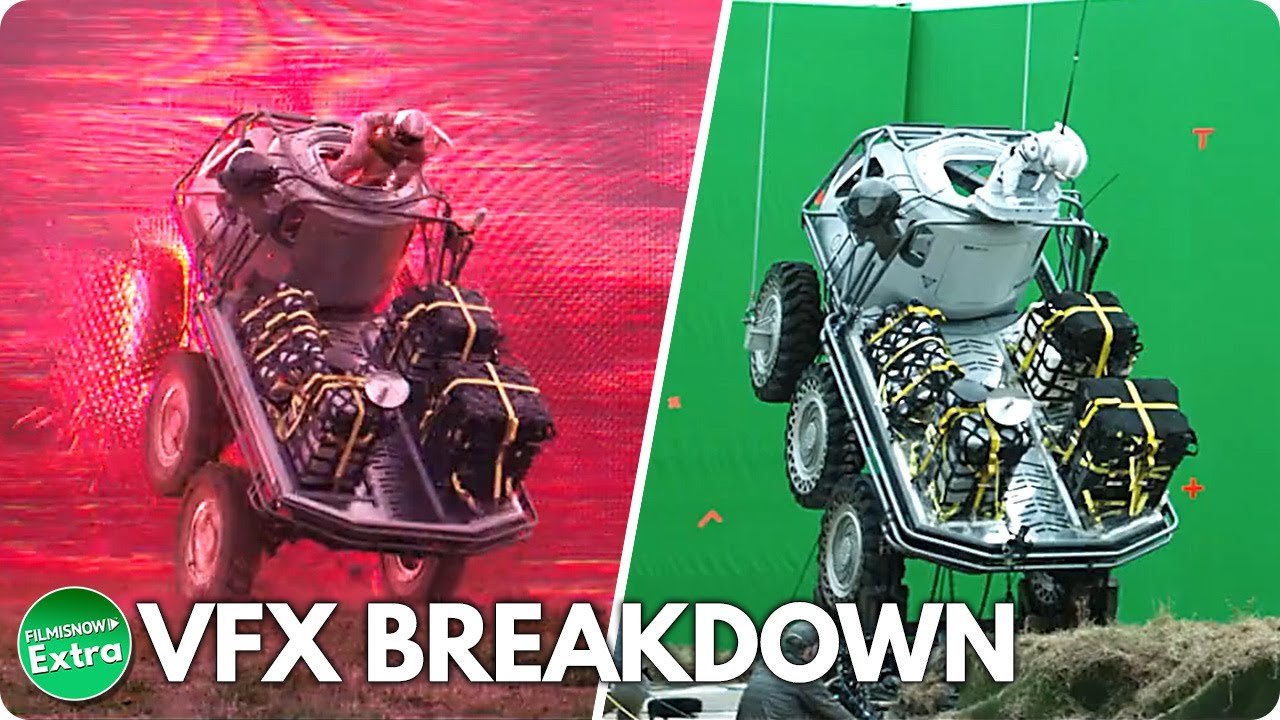
We could wipe a VFX and comp the two env. I wonder if we could do this with a live-comp technique. This approach is likely not in scope.

We could do a particle-based morph-like effect. The second video serves as a photoreal ref and has a great material transition.
Research:
Research:
Jewelery ads:
Jewelery ads:
Beautés du Monde Collection | Cartier High Jewelry - Cool transitions, mome-like effects, emphasis on symmetry and elegance.
Cartier High Jewelry: Le Voyage Recommencé - looks like ap vp add, doesn't fully utilize LED volume in the way Harbor would like us to. but definitely some cool ideas for what we can put in the background.
Swarovski - Reveal Your Facets - fun colors, active camera
Luxury Redefined: Explore BlueStone's Solitaire Rings - Effect-focused
Tiffany & Co. — A Tiffany Holiday - Narrative Emphasis
3D Product Animation | Jewelry | Ring @cartier | Blender 3D - 3d add, has good motion.
Environmental Transition Effects:
Environmental Transition Effects:
Doctor Stange and the Multiverse of Madness - Mirror Dimension
Room of Requirement upgrade - Hogwarts Legacy
Room of Requirement door - Harry Potter and The Order of the Pheonix
Spike Jonze for Apple HomePod - Welcome Home
Hagrid Opens Diagon Alley - Harry Potter and the Sorcerer's Stone
ENCANTO | Antonio Animation Test | Nicolas Prothais
Yelena Belova Vanish in 5 Seconds (FULL HD 60FPS) | Hawkeye Series | Disney+
Techniques and Tools
Techniques and Tools
As the first week started I compiled this list of techniques and tools that may be used in the project so I could better explain them to my team members as we talk about possibilities.
Unreal Engine
Unreal Engine
Unreal is my main software and I'd consider myself a power user. I am experienced with Niagara, Niagara Fluids, Motion Media Tools, and Material Networks in Unreal.
The Material Networks is Unreal's built-in node-based material editor. Using it we can animate sprites using flipbooks, and animate meshes using VATs, (we can even take a Houdini particle system and make it a VAT in a hacky way). There is also a plugin that allows us to create custom HLSL nodes which (while not offering any performance benefits over nodes) can be useful for complex shader math.
Niagara fluids will not be performant/realistic enough for VP (it could be one or the other :3 ), It may be usable for real-time renders to avoid some comp as we are lacking as a team on that front.
The new Motion Media Tools are super powerful and I doubt they've been used in a SCAD VP project yet. It can be used as a powerful rigid body solver, or to make simple effects. In addition, the tool features a cloner with lots of settings as well as animators and effectors which can all be keyframed in sequencer!
Niagara will likely be the primary tool I use to create effects in this project. I know it well but tend to forget scratch-pad nodes and useful HLSL calls. I will compile some resources at the start of week 2 to get ahead of this.
Houdini
Houdini
Houdini Engine is off the table as the plugin can't be installed at the LED Volume (At least not easily)
Houdini - Niagara plugin is similarly not usable at the LED Volume.
Flipbooks and VATS should work similarly in 5.5 but I need to do checks on performance. I haven't used either since 5.4.
Rabbit Holes
Rabbit Holes
Camera Tracking.
Camera tracking data could be used to re-render VP scenes in cleaner engine environments. (Dr. Fowler mentioned the FBX Camera data system used by Wyatt Clark last quarter)
Sound reactive effects.
Unreal can detect engine noises or system audio, process it through an oscilloscope, and provide us with those values in real time. We can use this information in Niagara systems or Motion Media tools to create various effects.
Resources:
Resources:
Previs
Previs
Rapid Prototype using Motion Design tools in Unreal 5
 TransitionPrevis_BenM_TeamCartier.mp4
Houdini Morph test - will test as vat soon
MorphPreVis.mp4Niagara Morph test - need write shader that samples mesh material at location.
RT_Morph.mp4Page updated
Google Sites
Report abuse