Embedded Files
Anchoring Phenomenon
Anchoring Phenomenon

What is happening with the gargoyles? Why do they slowly seem to disappear over time?
In this unit, students will learn:
Substances can change other substances
Substances can change but not disappear
Acids are very reactive substances
Chemical reactions are the mixing of two or more substances that create a new substance
Gases are made of particles too small to be seen

Lesson 1: Are Magic Potions Real?
Lesson 1: Are Magic Potions Real?
This lesson covers the conservation of matter. In this lesson, “Are magic potions real?" we covered chemical reactions. We learned about the alchemists, a historic group of people famous for mixing different substances. In our activity, we experimented like alchemists to figure out which liquids could change the appearance of dull copper pennies.
Here’s something you can try at home: find some old pennies, and invite your child to show you how to clean them. All you need is vinegar, salt, and dull copper!

Lesson 2: Could you transform something worthless into gold?
Lesson 2: Could you transform something worthless into gold?
This lesson covers the dissolving and particle nature of atoms. In this lesson, “Can you transform something worthless into gold?”, students created their own metal “transformations” (coating steel nails with copper from pennies) and developed models to explain what they observed.
Here’s a fun activity you can do at home with your child: look for things made of metal, and try to identify which kinds of metals they are. The most common silver-colored metals in the house tend to be made of iron, steel (which is mostly iron), or aluminum. How can you tell metals apart? Iron and steel are magnetic, whereas aluminum is not. Test which things are iron/steel and which are aluminum using a refrigerator magnet.

Lesson 3: What would happen if you drank a glass of acid?
Lesson 3: What would happen if you drank a glass of acid?
In this lesson, “What would happen if you drank a glass of acid?”, students investigated different ways to test for acids. They discovered that many common foods contain acid, including orange juice, ketchup, and salad dressing!
You can support your child’s curiosity at home. Look at the ingredient lists on labeled foods in your pantry and refrigerator. Which ones contain acids? You may find that acids such as acetic acid (vinegar), citric acid, and ascorbic acid (Vitamin C) are common ingredients in many foods!

Lesson 4: What do fireworks, rubber, and Silly Putty have in common?
Lesson 4: What do fireworks, rubber, and Silly Putty have in common?
In this lesson we learned how chemical reactions create new materials that have useful and interesting properties. Your child conducted an investigation to determine if the mixing of various substances resulted in a new substance. In this case, your child discovered how to make a type of “goo” similar to other goos, like Silly Putty and Play-doh.
You can support your child’s curiosity at home by watching some videos of amazing chemical reactions together. Here is a wonderful series of demonstrations done for the public by a scientist at the Royal Institution: Video
Lesson 5: What do fireworks, rubber, and Silly Putty have in common?
Lesson 5: What do fireworks, rubber, and Silly Putty have in common?
In this lesson, students investigated the question “Why do things explode?” Students created their own (small) explosions by combining vinegar and baking soda in a plastic bag. Then, they developed models to explain how gas bubbles caused the bag to inflate and pop.
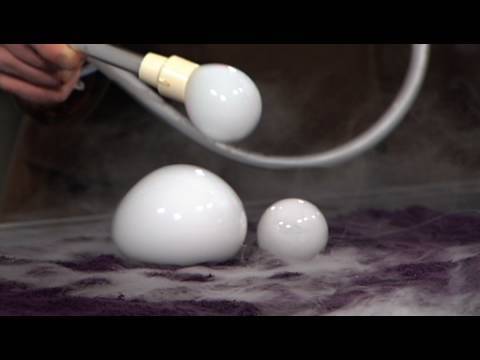
You can encourage your child’s curiosity at home! Watch this video of dry ice soap bubbles together. (You can even try making dry ice bubbles yourself using dry ice from the grocery store!)
Page updated
Report abuse