
MUSIC
Embedded Files

They say that Life is Music... the rest is just details. Music, as you probably know, Is Good For The Soul.
Chester cricket's musical talent has him playing everything from opera to hymns to Italian folk songs. The music flows through the chapters in a beautiful way, adding to each scene as we see how music can affect people in deep, profound ways.
Music is a unifying theme in The Cricket in Times Square; somehow, Chester's music is able to tie everyone together. Music is a little bit like that.
"Without knowing what he was doing, the cricket began to chirp to ease his feelings. He found that it helped somehow if you sang your sadness. "(p. 95)
In Our Story..
Music—in particular, the sound of a violin—is a recurring motif in this story. Chester's chirp is frequently described as sounding like a soft violin playing, and other characters' voices, including Sai Fong's, are described using musical terminology as well.
Although Chester's chirp is compared to a violin multiple times throughout this story, this particular instant is important because it was the very first time Mario heard Chester.
He is immediately struck by how beautiful the sound is, as so many other characters will continue to be impressed with Chester as the book goes on.
These repeated comparisons of Chester's sound to a musical instrument foreshadow the concerts that Chester will perform for the newsstand's patrons at the end of the book.
"It was like a quick stroke across the strings of a violin, or like a harp that has been plucked suddenly" (p. 8) (Simile)
"It was like a quick stroke across the strings of a violin, or like a harp that has been plucked suddenly" (p. 8) (Simile)
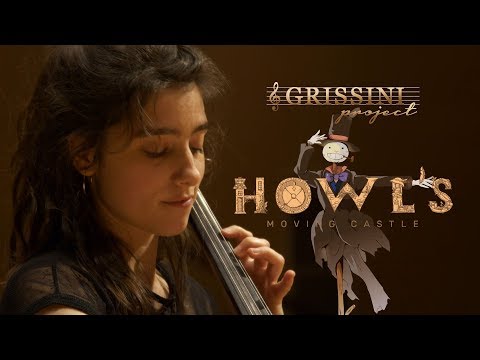
Specific Music
As we read our book we come across great pieces of music or musical terms. Let's take a look at some of them...
Blue Danube Waltz
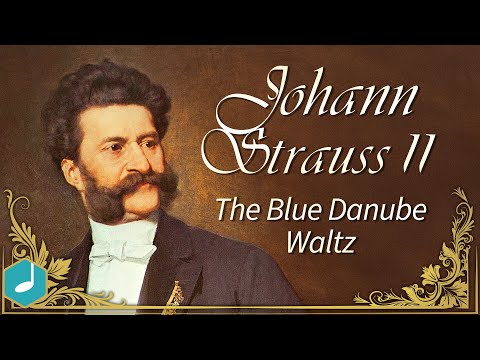
In Chapter 10: The Dinner Party, Chester hears Blue Danube Waltz on the radio, and discovers his talent for memorizing the melody. He learns to play variations of the theme without ever losing the rhythm of the waltz.
The melody is the main part of a musical composition, in contrast with the supporting harmony and rhythm.
A waltz is a piece of music composed in a triple meter with a strong accent on the first beat. Learning to recognize the rhythm of a waltz is wonderful fun.
Torna a Surriento
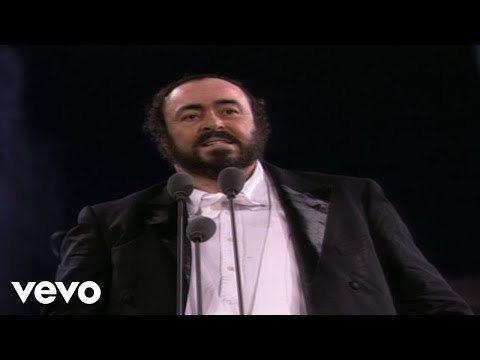
In Chapter 11: The Jinx, after a series of unfortunate events, Chester begins to play music he learned during the disastrous dinner party. He begins with an Italian folk song that just happens to be Mama Bellini’s favorite song: Torna a Surriento, Come Back to Sorrento.
"It was so melancholy, and yet so sweet, that it fitted his mood exactly." (p. 96)
"But now here she was crying and warbling like an Italian nightingale!" (p. 97)
"But now here she was crying and warbling like an Italian nightingale!" (p. 97)
When Selden compares Mama Bellini to an Italian nightingale, he creates sound imagery that will allow readers to hear how deeply hearing Chester play "Come Back to Sorrento" affects her. It is a stark contrast from her mood just a few minutes before, when she was livid with the cricket for starting the fire that destroyed some of the newsstand.
Aida
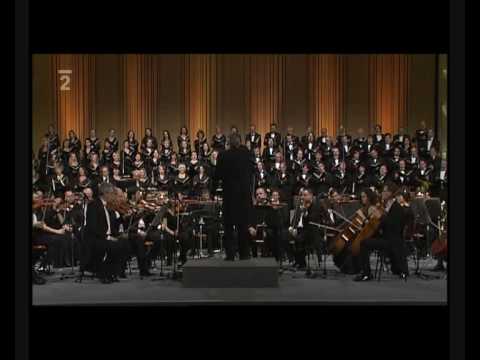
Upon Mr. Smedley’s astonished exclamations, Papa Bellini proudly boasts about Chester’s rendition of Aida. Aida is a 19th century opera in four acts by Giuseppe Verdi.
Aida’s Grand March is a great example of a piece of music that is both forte, or loud, and piano, or soft. Listen to how the music goes back and forth between forte and piano.
A Little Night Music
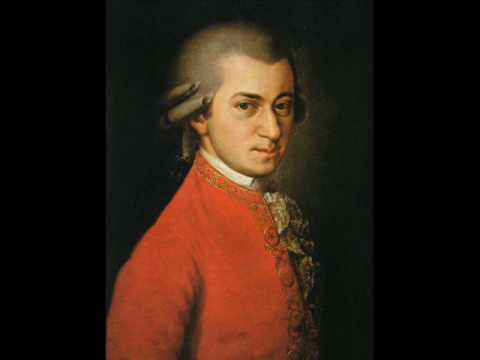
In Chapter 13: Fame, Chester begins one of his first public concerts with Mozart’s A Little Night Music.
Eine kleine Nachtmusik K. 525, is a 1787 composition for a chamber ensemble by Wolfgang Amadeus Mozart. The German title means “a little serenade,” though it is often referred to literally but less accurately as “a little night music.”
Stars and Stripes Forever
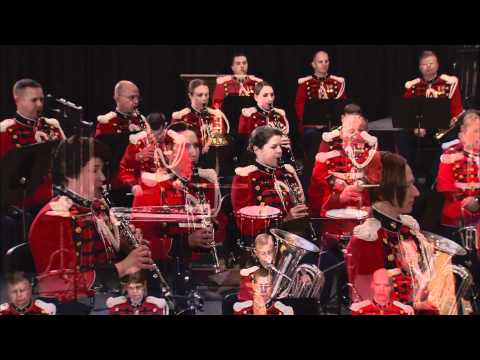
In Chapter 14, Tucker Mouse critiques Chester’s performance of Stars and Stripes Forever saying his tempo was off. This famous march composed in 1896 by John Philip Sousa is considered to be the composer’s magnum opus.
Sousa explained that the three themes of the final trio were intended to represent the three regions of the United States. The broad melody, or main theme, represents the North. The South is represented by the famous piccolo obbligato, and the West by the bold countermelody of the trombones. The three come together in the climax, representing the Union itself.
Orpheus

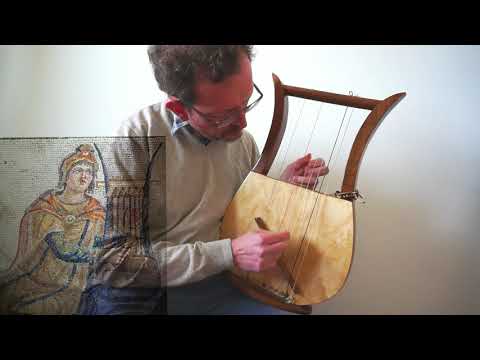
Chapter 14 is titled “Orpheus.” Orpheus is a legendary musician, poet, and prophet in ancient Greek mythology.
Orpheus was son of the great Olympian god Apollo. In many ways Apollo was the god of music and Orpheus was blessed with musical talents.
""Orpheus was the greatest musician who ever lived, " said (Mr. Smedley) the music teacher. "Long, long ago he played on a harp - and he played it so beautifully that not only human beings but animals and even rocks and trees and waterfalls stopped their work to listen to him. The lion left off chasing the deer, the rivers paused in their courses, and the wind held it's breath. The whole world was silent." Mario didn't know what to say. He liked that picture of everyone keeping quiet to listen. " (p. 41)
Mr. Smedley, the Bellinis' best customer, alludes to the mythological figure of Orpheus, a musician so talented that the entire world—even inanimate objects—stopped to listen to him. Legend says that he was able to charm all living things and even stones with his music. Mr. Smedley calls Chester Cricket a "little black Orpheus" (p. 40).
Chester's Last Performance.
Chester's final performance parallels the performances Mr. Smedley describes early in the book, in which Orpheus plays and the world stops to listen. Just like the world stopped for Orpheus, when Chester chirps his final song, Times Square comes to a standstill, listening to him.
"Like ripples around a stone dropped into still water, the circles of silence spread out from the newsstand" (p. 133) (Simile)
"Like ripples around a stone dropped into still water, the circles of silence spread out from the newsstand" (p. 133) (Simile)
Chester's beautiful music is powerful enough to have an effect on everyone around him, the way a single stone dropped into the water can make ripples spread far away from it. This, Chester's final performance, is the most profound, and for a moment it seems like all of New York City has stopped to listen.
In this instant, Chester has achieved something truly special.

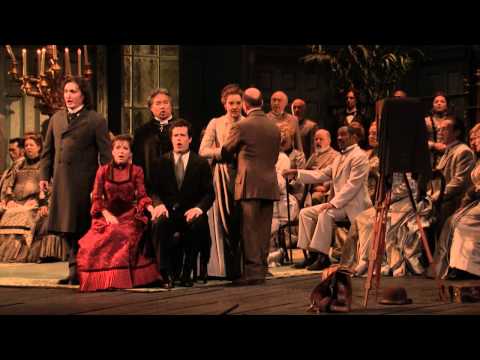
Luca Di Amermoor
Chester’s last song is so beautiful it brings silence to the subway station and all the way up to Times Square above. Listen to this with your eyes closed to imagine what that scene would have been like.
Can you imagine it?
Some Musical Terms
Musical terms refer to the specific words and phrases used to describe and identify various musical concepts, techniques, and elements.
By understanding musical terms relating to tempo, volume, tonality, and many other topics, you will be able to properly read and perform sheet music, convey the intended emotions and moods of the music, and collaborate effectively with other musicians.
Furthermore, knowledge of musical terminology is crucial for music theory, as it will enable you to analyze and interpret the structure and meaning of a piece of music.
Perfect Pitch
Perfect pitch refers to a person’s ability to identify any musical note by name after hearing it, without reference to other notes. Perfect pitch—also known more technically as absolute pitch—can also refer to the ability that some singers have to sing a given note on cue.
The Bellinis brag to their customer Mr. Smedley about their talented cricket, who does not believe them at first, but is astonished when he hears it for himself. Mr. Smedley tests the cricket's pitch and finds that it is perfect.
Mr. Smedley is so pleased with the cricket that he decides to write a letter to the music editor of the New York Times, raving about how incredible the Bellini's singing cricket in the Times Square subway station is. He implores everyone who reads to come to hear one of Chester's concerts. It is the start of something much bigger than Chester could ever imagine.

Scale
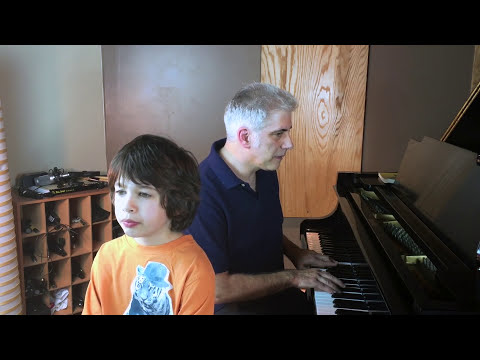
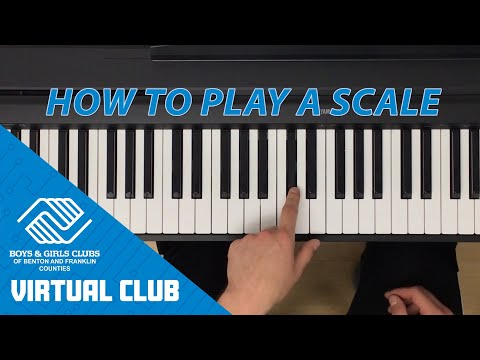
In music, a scale is a set of notes in order of their pitch. If the pitch is becoming higher, it is called an ascending scale. If the pitch is becoming lower, it is called a descending scale. In some scales, for example a melodic minor scale, the pitches in the ascending scale are different to the pitches in the descending scale. The steps between the pitches, measured in tones (also called a "whole step") and semitones (also called a "half step"), are different in different types of scales.
On a piano, there are white keys and black keys. If we start on the note C and play each white key going up until we come to the next C, we have played the C Major scale. There were eight notes. In order going up, they are C (middle), D, E, F, G, A, B and C (high), or can be octaves higher or lower. Scales can also go up, then down, like C (middle), D, E, F, G, A, B, C (high), B, A, G, F, E, D, C (middle).
Operatic Aria
The Italian word “aria” simply means “air.” In music, an aria is a long song, usually in an opera, with a soloist singing. Opera is a genre of classical music.
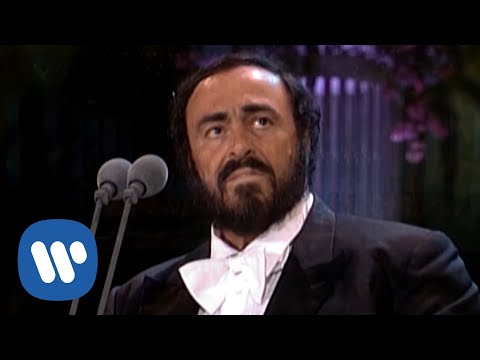
Voices can be classified based on a number of factors including vocal range. Listen to arias performed by different vocal talents:
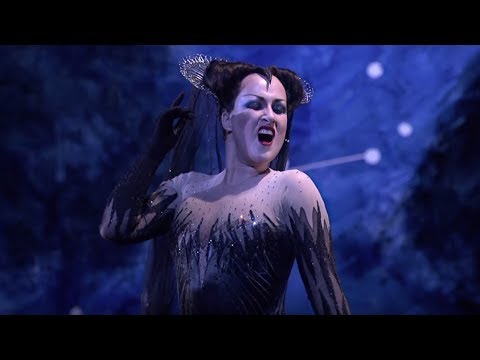
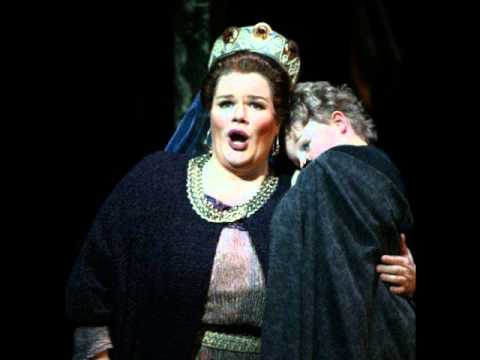
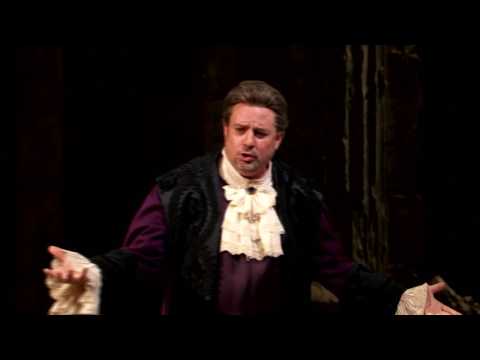
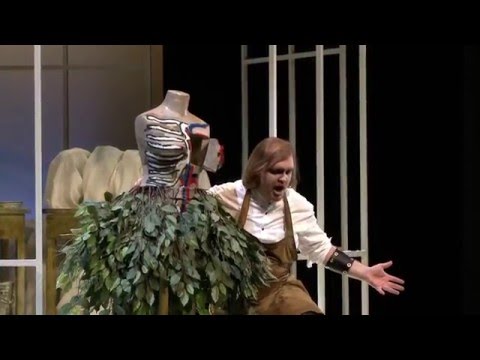
Chester determines that it is easier to play the arias written for tenors than the ones for sopranos, contralto, and basses.
Luciano Pavarotti, and Andrea Bocelli are both Italian opera singers who crossed over into popular music and eventually became two of the most commercially successful tenors of all time.
Malakai Bayoh is a vocalist from the UK. He is best known for his operatic soprano performance. Malakai is 13 and loves singing and is a proud member of the Choir of St George's Cathedral


Rumba
The term rumba may refer to a variety of unrelated music styles. Originally, "rumba" was used as a synonym for "party" in northern Cuba, and by the late 19th century it was used to denote the complex of secular music styles known as Cuban rumba. Since the early 20th century the term has been used in different countries to refer to distinct styles of music and dance, most of which are only tangentially related to the original Cuban rumba, if at all.
"Rumba" was the primary marketing term for Cuban music in North America, as well as West and Central Africa, during much of the 20th century, before the rise of mambo, pachanga and salsa.
Symphony
In Chapter 12: Mr. Smedley, Chester begins his formal music education by memorizing three movements from three different symphonies.
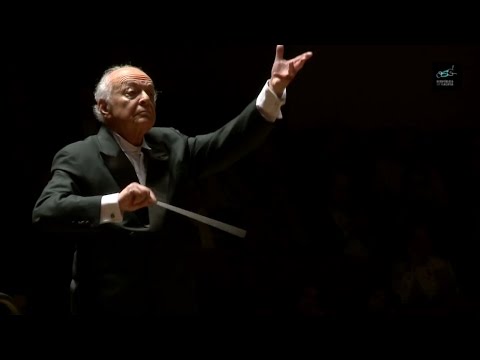
A symphony is an extended musical composition for orchestra in several parts called movements. A symphony typically has four movements.
Mozart’s Symphony No. 41, subtitled “Jupiter,” was his final and greatest symphony. It was a culmination of his life’s work.
Violin Concerto
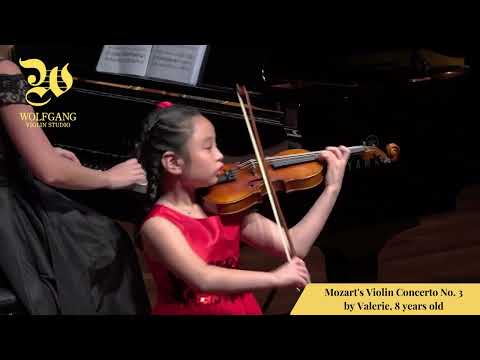
A violin concerto is a concerto for solo violin (occasionally, two or more violins) and instrumental ensemble (customarily orchestra). Such works have been written since the Baroque period, when the solo concerto form was first developed, up through the present day.
Hymns
A hymn is a type of song, and partially synonymous with devotional song, specifically written for the purpose of adoration or prayer, and typically addressed to a deity or deities, or to a prominent figure or personification. The word hymn derives from Greek ὕμνος (hymnos), which means "a song of praise".
Page updated
Google Sites
Report abuse