
Crickets
Embedded Files

If you live near a wooded area, chances are you have heard the chirping songs at night. This sound is from crickets, nocturnal insects with antennae and wings.
A cricket is a leaping insect known for the chirping sound it makes by rubbing its wings together. The name for the cricket comes from the French word criquer, which means ''to creak.''
Crickets can be found in nearly every part of the world, except where temperatures remain extremely cold year round. Crickets live in grasses, trees, bushes and nearly anywhere else where they can hide from predators.


In Our Story...
Obviously our cricket, Chester, is our main character and the star of our story.
"He slid open his matchbox so his cricket could look around. It might be a while before they could come back. (Mr. Fong) peered at Chester. "Say, that fellow looks like a real fighter. Strong legs, thick head. That's a Black Head General.""
Honest and loyal, Chester will do his utmost to help his friends prosper, even if it costs him his freedom.
"Are crickets lucky? asked Mario. "Very. We like to say "a little body often harbors a great soul."" (p. 46)
The little silver bell that Sai Fong gives to Mario to put in the cricket cage is a symbol for Chester's new life in New York.
It represents the friendships he has made there and all he has accomplished, and this is why he decides to take it with him back to Connecticut at the end of the story. It will serve as a reminder of his summer in the big city.

Kinds
There are over 900 species of crickets. Some species of crickets are omnivorous, meaning they eat both plants and other animals. Others only eat plants or plant materials, such as fruit, seeds, and leaves.
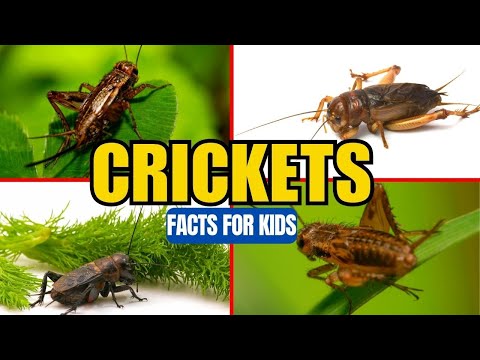
Two of the most common crickets are the field cricket (genus Gryllus) and the house cricket (Acheta, formerly Gryllus, domesticus) of the subfamily Gryllinae. They are stout-bodied and black or brown and often dig shallow burrows. They may feed on plants, animals, clothes, and each other.
The field cricket (also called the black cricket) is common in fields and yards and sometimes gets into buildings.
The house cricket, introduced into North America from Europe, has a light-colored head with dark cross bands and may be found in buildings and refuse heaps. Widely distributed, house and field crickets chirp day and night.
Other crickets include ground crickets (subfamily Nemobiinae, or sometimes Gryllinae) and tree crickets (subfamily Oecanthinae). Ground crickets are commonly found in pastures and wooded areas. Their song is a series of soft, high-pitched trills. Tree crickets are white or green in color and have transparent wings.
Habitats
A habitat is a place where an animal naturally lives or a plant naturally grows. A habitat is composed of five basic elements: food, water, air, shelter, and space. A healthy habitat provides everything an animal needs to survive and grow.
In North America, there are many different types of habitats, such as forests, grasslands, deserts, and wetlands. Crickets live in almost any environment—forests, grasslands, wetlands, caves, beaches, and underground. Crickets, like other animals, will make their home wherever they can find food, water, air, shelter, and space. Crickets hide out in dark places, and don't mind the dark.


A small, inch-long, shiny black cricket from the Connecticut countryside, Chester feels close ties to his tree-stump home there, where he chatted with swallows and played his music for “woodchucks and pheasants and ducks and everybody else who lives in the meadow or the brook” (133).
The environment in which they live often determines their color. Dark green or brown crickets can easily blend into an environment where there is lots of grass or dirt. Desert crickets, on the other hand, are often a lighter brown in order to blend into the lighter soils.
Sound
Crickets are known for the chirping sound it makes by rubbing its wings together. Crickets are nocturnal, meaning they are most often heard in the late afternoons or evenings and into the night.
Only the male cricket chirps in order to communicate. Different types of chirps are used to call other crickets, impress females, or warn rivals to stay away.

Cricket wings have one edge with teeth like a "comb" and one with a "bow". The hard edge rubbing against the teeth of the other wing makes the chirping sound. Crickets are "right winged" and katydids are "left winged."
The common field cricket has 142 teeth, and in its normal call uses 67 of the teeth to make its sound, which it produces as a triple note at 4,900 hz, which is higher than the highest octave on the piano.
!!!

Vocabulary Alert: STRIDULATION
usually involves rubbing the covers of the wings together in a particular way. One wing has a serrated surface (a “file”) that runs along an enlarged vein; the other wing has a sharp edge over which the file is scraped.
The scraping causes the wing surfaces to vibrate; the natural resonances of the vibrations and the particular rhythm and repetition rate of the scraping movements determine the nature of the song, which varies with each species.
Crickets' chirping is temperature-dependent—the warmer the temperature, the faster a cricket will chirp. As a result, cricket chirping can be used to make a general estimate of the temperature in a geographical area. The easiest way to estimate the temperature is to count the number of chirps within 15 seconds and add 40. This can provide the approximate temperature within a few degrees Fahrenheit. However, it is not an exact measure, as multiple other factors can affect the rate of a cricket's chirping; these can include the cricket's age, mating status, hunger, and nearby competition.
In Chinese Culture
Did you know that the Chinese have been raising crickets as pets for thousands of years?
Emperors fell in love with crickets, had cricket fighting competitions, wrote poetry about them, and kept them in small cages in their pocket so the crickets would never get cold in the frosty Autumn weather.
Cricket in Chinese called bancho!
Many cultures think crickets bring good luck. In fact, some people even keep crickets as pets.
It is thought to be a sign of wealth and good fortune. This was especially true in some Asian countries where the cricket was seen as the “watchdog.” The crickets were housed in small cages and suspended from rafters and doorways as pets. It is said that the cricket’s chirping would stop when danger was approaching; therefore, they act as an ‘alarm system’ to warn of unwanted guests.
This practice, although dating back some time to the Tang Dynasty in China (618-907 AD), still continues today. In some Native American cultures, the cricket was also regarded as lucky, and it was considered disrespectful to mimic its chirping.
What else do crickets symbolize in Chinese culture?
Luck and Prosperity: Positive Meanings Associated with Crickets. One of the most common spiritual meanings of crickets is good luck and abundance.
It's said that if you hear a cricking chirping or one finds its way into your home, you and your family will experience fortune very soon.

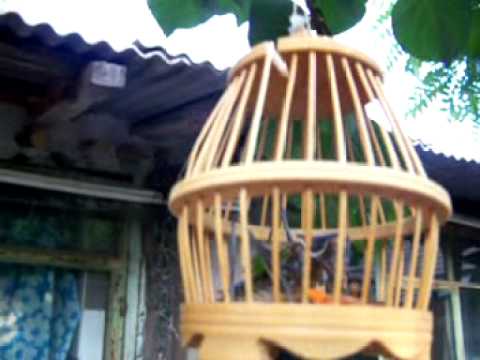
It was said that as early as 500 BC, the cricket’s lucky history began with its song. The Chinese always exhibited an appreciation for singing insects, and the cricket emerged above all others in popularity.
The presence of crickets within the Chinese culture was, in fact, so strong that there are a number of songs and poems that were written about them.
Listen to the Crickets
by Bai Ju-yi, a poet, who lived 772-846, one of the most famous poets in China.
Crickets sing "creak creak" all night.
Autumn's dark clouds almost rain this day.
Afraid that sad people will sleep a while,
The "creak creak" moves to the front of the bed.
Farmers in China often relied upon the first cricket chirps in spring as a cue for when to plant in the fields.

Besides being a symbol of good luck, the cricket is also thought to be a symbol of prosperity, wealth, and abundance. This is often referred to as the Feng Shui Lucky Cricket meaning. This conception of the cricket begins with the lucky cricket wandering into your home, which symbolizes good fortune venturing into your life.
It is also seen as prophetic: when the cricket makes its way into your house, it is meant to symbolize someone coming to pay you an unexpected visit to grant a wish or bestow you with good fortune.

Other people consider crickets to be delicious snacks.
If you travel to many Asian countries, you might enjoy a deep fried cricket as a special treat!
About Crickets..
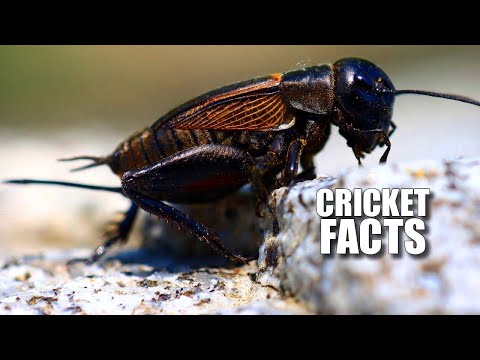
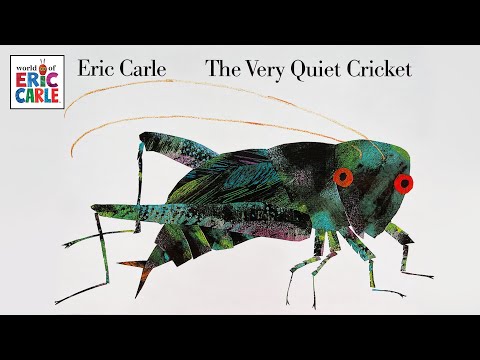
They have thin antennae protruding from their heads that they use to smell and touch. Their powerful hind legs are longer than their forelegs and are modified for jumping. Most crickets have two pairs of wings that help them jump: the ones in front are tough and stiff, and the ones in the back are long and thin.
Read Alouds

About Entomologists
Entomologists study insects – the most numerous creatures of Earth. We seek to know how these bugs live, how they build their own societies, and how they affect us.



Page updated
Google Sites
Report abuse