
Chinatown NYC
Embedded Files

The story of Chinatown is the story of a neighborhood; an American neighborhood, an old neighborhood, an immigrant neighborhood, where the old country still lives inside the new one. The past and the present are inseparably woven together in this neighborhood.
"CHINATOWN" offers a revealing look at how a group of people bound geographically, culturally, linguistically and economically during hostile times has flourished to become a vibrant, courageous and proud community for Chinese Americans


Chinatown New York City is the biggest in the United States, with the largest concentration of Chinese in the Western Hemisphere. It is located on the Lower East Side of Manhattan. With an area covering two square miles, Chinatown is home to a resident population estimated at 150,000. Manhattan’s Chinatown is loosely bounded by Lafayette, Worth, Grand and East Broadway streets.
In Our Story...
Mario heads to Chinatown to buy Chester a proper cricket cage. "At the Canal Street stop Mario got off (the subway) and walked over several blocks to Chinatown." (p. 44)
"Mario walked up and down the narrow, curving streets, zigzagging across them so he could look in the windows on both sides. In some he saw the cardboard shells that open up into beautiful paper flowers if you put them in a glass of water, and in others the glass wind harps that tinkle when they're hung where the breeze could reach them." (p. 44)

Some of the most detailed passages of imagery happen when a character is seeing something new for the first time, and this is true of when Mario ventures into Sai Fong's shop in Chinatown. He takes in all his surroundings, and the descriptive passages allow readers to feel as if they are walking into the shop, too.
Demographics

Definitions from Oxford Languages · Learn more
dem·o·graph·ic
/ˌdeməˈɡrafik/
adjective
relating to the structure of populations.
"the demographic trend is toward an older population"
noun
a particular sector of a population.
"the drink is popular with a young demographic"
Chinatown is a surprisingly diverse neighborhood. Since the 1800’s the area today called Chinatown has been home to the highest number of immigrants in New York, representing a variety of ethnic groups. In the mid-1800’s, the Irish, Germans, and freed slaves resided here and by the late 1880’s and into early 1900’s the next wave of immigrants brought Eastern European Jews, Chinese, and Italians.
Today, the majority of Chinatown's inhabitants are from the Guangdong, Toisan and Fujian Providences in China as well as Hong Kong. The Cantonese community today is well established in this area whereas the Fujianese people, who come from Fujian Province on the southern coast of mainland China, are considered the “new immigrants”. The neighborhood is also home to Dominicans, Puerto Ricans, Burmese, Vietnamese, Filipinos and West Africans, among others.
History
The Chinese first arrived in the US in the early 1800s. Many of these new immigrants worked during the gold rush in mining, manufacturing, and building railroads. The Chinese in the U.S., were largely self-supporting, with a growing internal structure of governing associations and businesses that provided jobs, economic aid, social services and protection.


Life became more difficult with the enactment of the Chinese Exclusion Act (1882-1943), limiting the growth of Chinatown. Chinatown has been growing steadily since the elimination of the immigration quota in 1968.
Today Chinatown is home to hundreds of garment factories that have an annual payroll bill of over $200 million, a jewelry district that rakes in approximately a $100 million in gold and diamond sales per year, over 200 restaurants that attract thousands of tourists, and 27 banks, by far the highest bank-per-capita ratio in the city.

Fun and Interesting things to do
There are sooo many cool things to do in Chinatown!!
Vibrant Chinatown is a densely populated neighborhood that draws foodies and tourists to its many Chinese and Southeast Asian restaurants for dumplings, pork buns and hand-pulled noodles.
The busy sidewalks are packed with souvenir stores, bubble tea shops, and markets selling everything from fresh and dried fish to herbs and spices. Locals hang out in leafy Columbus Park for Tai Chi, chess and mahjong.

Unbeknownst to many, over 10 distinct Asian fares grace Chinatown’s exciting, narrow streets. Not sure what you’re hungry for? After passing dozens of tempting eateries in just a few short blocks, you sure will be. Cantonese, Shanghainese, Szechuan…. and those are just the Chinese cuisines! Thai, Singaporean, Japanese, Indonesian, Asian fusion and others round out a list of fares representing a gastronomic dream for lovers of Asian cuisine.

Joe's Shanghai
Oooo our favorite!!
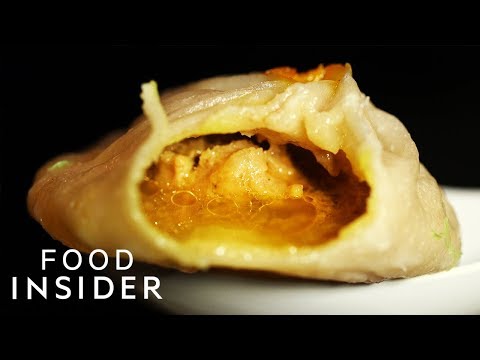
A trip to New York's Chinatown isn't complete without a stop at 9 Pell Street. And even though they've now moved up the block, hundreds of customers walk through the restaurant's doors each day for one thing. It's called xiao long bao, or Chinese soup dumpling. This is Joe's Shanghai, and it's been serving New York's most legendary soup dumplings since 1995.
Soup dumplings are a staple dish in Chinese and, in particular, Shanghainese cuisine thought to be invented in the late 1800s. They are made using a very thin dumpling skin that's rolled out and flattened into small circles.
Mott Street
Colorful hanging lanterns and twinkling lights above Mott Street mark the entrance to Chinatown. Here savory aromas promise pork buns and dumplings, available in businesses and restaurants dotted throughout the densely packed streets.
The area formed by Mott, Bowery, and Bayard Streets comprises the neighborhood’s heart, bustling with noodle, dim sum, and tea shops. Colorful murals pave the path through Doyers Street, the pedestrian walkway that’s home to the century-old Nom Wah Tea Parlor.

MOTT STREET is where visitors can truly feel the hustle and bustle of Chinatown. A plethora of banners and signs with Chinese writing, some of Chinatown’s most popular restaurants and shops, and the rhythms of Mandarin and Cantonese dialects fill this narrow street. The oldest street in Chinatown inhabited by the Chinese, it is also the site of the Chinese Community Center and the Eastern States Buddhist Temple of America.
The street is also home to 32 Mott Street (where the oldest shop in Chinatown used to stand – established in 1891), and 41 Mott Street (the only building that remains with a wooden pagoda roof).
Bakeries


Chinese pastries are delicious!! From sweet to savory, meat-filled, red-bean flavored or made with coconut, there is a unique taste for every palate when it comes to Chinese pastries.
Typically, the sweet aroma of a Chinatown bakery can be sensed even before the store is in sight.
Chinatown is packed with upscale bakeries offering a dizzying array of pastries. However, most are known for an exceptional product, whether it is a buttery egg tart, a sponge cake or a lotus-filled hopia.
There is nothing sweeter than this.
Museum at Eldridge Street

The Museum at Eldridge Street is housed in the historic Eldridge Street Synagogue. Built in 1887, it is an architectural marvel and a symbol of immigrant aspirations realized. The building is the first grand synagogue purpose-built by Eastern European Jewish immigrants in the United States
Visitors are welcome to tour the National Historic Landmark and learn about its time as a cultural hotspot in the bustling Jewish Lower East Side, to its decades of decay, to its miraculous rebirth as a 21st-century Museum in present day Chinatown.
Tea Houses
Throughout China and Japan, a teahouse (Chinese: 茶館, cháguăn or 茶屋, cháwū; Japanese: chaya (茶屋); Standard Nepali: chiya ghar (चिया घर)) is traditionally a place which offers tea to its customers. People gather at teahouses to chat, socialize and enjoy tea, and young people often meet at teahouses for dates.


An integral part of everyday life for the Chinese, tea houses offer visitors a place to relax and re-charge after walking and shopping in Chinatown. Try different varieties of Chinese tea and enjoy a snack at the same time
Museum of Chinese in the Americas
One of the foremost facilities of its kind in the United States, the museum offers exhibitions, Chinatown walking tours, a slide show and an extensive archive and reference library about the history of Chinese-Americans. The museum's new location is in a space designed by Maya Lin.
Founded in 1980, the Museum of Chinese in America (MOCA) is dedicated to preserving and presenting the history, heritage, culture and diverse experiences of people of Chinese descent in the United States.
The greatly expanded MOCA at 215 Centre Street is a national home for the precious narratives of diverse Chinese American communities, and strives to be a model among interactive museums.


Candy Stores

There are a whole bunch of cool and fun candy stores right in and around Chinatown. Economy candy, Stick With Me Candy or Biggies Bodega, Paradise Candy or Spring Iconic Sweet Shop. All worth a stop in.
Other favorites are Sugartown, Ming Lee Trading Co or Ali Ichiban. They have boxes of candy, some drinks and hundreds of individual bins of wrapped candies from all over Asia. Candies in flavors like: ginger, taro, rambutan, jackfruit, chili, rabbit cream, the list was endless. SO fun to fill small bags with many flavors to try. Its interesting just visiting and looking, choosing and buying and being able to experience the different flavors of candy enjoyed in other parts of the world.


The Five Points
FIVE POINTS (at the intersection of Mosco, Worth and Baxter Streets), it was named for the intersection of the five streets that converged at the south end of what is now Columbus Park. It is was also the site of the city’s first tenements built to accommodate immigrants from Germany and Ireland.

Edward Mooney House

EDWARD MOONEY HOUSE is the oldest residence in New York and is found on at the corner of Bowery and Pell Street. Built in 1785 by Edward Mooney, an amateur butcher, today it houses the Summit Mortgage Bank.
Ice Cream
The origins of ice cream are both mythical and abstract, including legends attributing the invention of ice cream to the Chinese during the Tang Dynasty.

There are a few different choices for ice cream (or bubble tea) in Chinatown. Egloo is good, or Juicy Spot. Sam's Fried if you like that. Mochidoki if mochi is your thing.
But best flavor-wise is probably Chinese Ice Cream Factory. For more than 30 years they've been serving up quality, authentic, homemade traditional Chinese recipes. Their flavors are so interesting and also delicious. There are ones like Almomd Cookie , Pineapple or Mango, Red Bean, Durian, Lychee, Green Tea, Black Sesame and Don Tot (Light creamy Chinese egg custard).


First Shearith Israel Cemetary
This is just south of Chatham Square. It is the oldest cemetery and artifact in New York City, dating back to 1683.
This small graveyard, on St. James Place near Chatham Square in present-day Chinatown, is the oldest surviving Jewish burial ground in New York City. It was used by Congregation Shearith Israel, the first Jewish congregation in North America.

About a hundred headstones and aboveground tombs can still be seen in what remains of the old graveyard, which lies above street level on the south side of St. James Place. Congregation Shearith Israel continues to maintain the cemetery, and it also has an annual Memorial Day ceremony at the site in honor of the Revolutionary War veterans buried there.
SO many other things to do and see!!
Page updated
Google Sites
Report abuse