Embedded Files
Lesson 3
“If technology is purely market-driven and we don’t focus innovation on the big inequities, then we could have amazing inventions that leave the world even more divided.”
– Bill Gates, Microsoft Co-founder
tABLE OF CONTENTS
tABLE OF CONTENTS
About Media Literacy
About False Information
3 Minutes Classroom
About Media Literacy
This infogram shows four important concepts:
What is media?
What is literacy?
What is media litercay?
What are six principles of media literacy education?
Why Media Literacy Education is important?
Having education and becoming literate can help one to live a better life. The progress of global literacy can be seen these days. The rate has been increasing. However, there are still rooms to improve. The following map and charts show the global literacy and the illiteracy rate in 2019. And for the media literacy education, it is important to show the connections between media and daily life. Utilizing the power of media and how to prevent being harmed by media become core competencies .
About False Information
What is FALSE INFORMATION?...(read more)
FALSE INFORMATION is information with unreliable and invalid sources. It is usually showed in news or advertisement for the purposes of misleading or manipulating others' thoughts. There are several forms of false information, such as clickbait, fake news etc. The following slides provide three types of false information and some examples.

MORE TO KNOW: DEEPFAKE VIDEOS
Deep fake videos are videos use techniques to replace someone into others' faces. This video show that deep fake videos are getting harder to spot, which means the audience needs to pay more attention on what they see, what they hear, what they read and what they absorb.
Click the video to learn more.
TWO STRATEGIES TO AVOID MISINFORMATION
Nowadays, everyone can easily access and create various information. Hence, there is more and more fake news or false information around us. Following part shows you important concepts to spot fake information. Click the videos to know more and answer questions created by Edpuzzle.

- cULTIVATING Critical thinking
"Once students know how to deconstruct media, they have gained a superpower."
-Andrea Quijada
Andrea Quijada is an educator and a trainer of media literacy. She devotes herself into teaching students and parents how to deconstruct media. In her speech, there are several examples showing how her students deconstruct advertisements successfully. Click on the video to learn more.
2. Understanding the power of information
2. Understanding the power of information
"Information is power, let's take back our power"
-Lisa Cutter
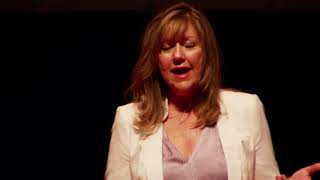
Lisa Cutter is a communication professional turned legislator. She talks about the impacts about false information and tells us some core principles. At the end of the speech, she also gives strategies to avoid false information and provides fact-check sources, such as POLITIFACT and SNOPES. Click on the videos to learn more.
3 Minutes Classroom
There are questions to ask when analyzing media messages. Those questions can help to deconstruct media messages. According to National Association for Media Literacy Education, questions can be categorized into three aspects, which are authors & audiences, messages and meanings and representations and reality. See the following mind mapping to learn more.
This 3 Minutes Classroom use 3 minutes to talk about two other important concepts when talking about media literacy. One is media messages and the other is media effects. What the video to learn more about it!
<--These can be used as practice worksheets.
Page updated
Google Sites
Report abuse