Embedded Files





















SEE WHERE THE COMPOSERS COME FROM!
SEE WHERE THE COMPOSERS COME FROM!
SAINT-SAENS - FRANCE IS GREEN
GRIEG - NORWAY IS PURPLE
BACH - GERMANY IS RED

Camille Saint-Saëns
Camille Saint-Saëns
October 09, 1835 - December 16, 1921
Like Mozart, Camille Saint-Saëns was a child prodigy. At 2½ he could pick out tunes on the piano; at the age of 3 he composed his first piece; and by 7 he was giving public concerts as a pianist and organist. When he was 10, he made his public debut and offered to play any one of Beethoven's 32 sonatas from memory. He had total recall of anything he had ever read.
Saint-Saëns was also a conductor, critic, music scholar, teacher and composer. Working in Paris, he founded a society that supported an entire new generation of French composers. Despite these talents, he never quite lived up to expectations. While he composed operas, none were very popular. His style of music was traditional and conservative and for the most part followed Classical traditions. His best-known works are several concertos, an organ symphony, Danse Macabre and The Carnival of the Animals.
Danse Macabre, Op. 40, is a tone poem for orchestra, written in 1874 by the French composer Camille Saint-Saëns.
A TONE POEM is an instrumental composition intended to portray a particular story, scene, mood, etc
Danse Macabre was written to portray the story of an old French superstition.
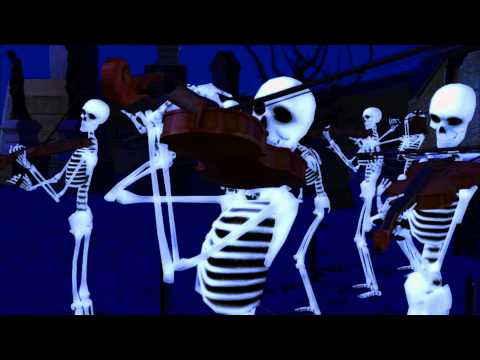
According to legend, Death appears at midnight every year on Halloween. Death calls forth the dead from their graves to dance for him while he plays his fiddle (here represented by a solo violin). His skeletons dance for him until the rooster crows at dawn, when they must return to their graves until the next year.
Danse Macabre 2010 ( Saint-Saëns )
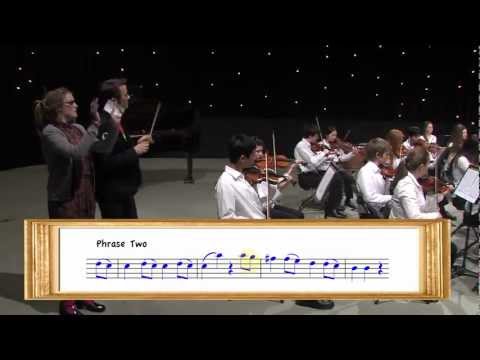
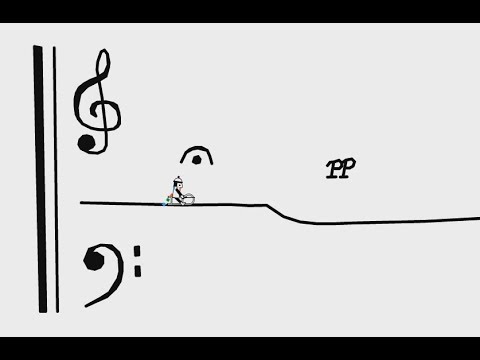
Listen to the music again following along with these listening maps. Pay close attention to the instruments playing, the dynamic levels and even the tempo change. You will hear lots of violins and wooden xylophones played with specific mallets are used to make the sound of skeleton bones!





Charles-Camille Saint-Saëns was born in Paris, France in 1835. His father was a government clerk who died three months after his birth. At the request of his mother, Camille's great-aunt Charlotte moved in with them. She was the first to introduce him to the piano. Beginning piano lessons at the age of two, he came to be known as one of the outstanding child prodigies of his time. He almost immediately began to write music with his first composition for piano dated March 22, 1839. His talent was not limited to music, he also learned to read by age three and mastered Latin by age seven.
In 1886 Saint-Saëns premired one of his most loved works - Le Carnaval des Animaux (The Carnival of the Animals). Shortly after its premiere, however, Saint-Saëns requested that the complete collection of pieces not be performed, allowing only a single movement, Le Cygne (The Swan), a piece for cello and two pianos, to be published during his lifetime. The Carnival of the Animals was written as a musical joke, and Saint-Saëns believed it would harm his reputation as a serious composer. Instead, this work has provided a testament to the imagination and musical brilliance of Camille Saint-Saëns.
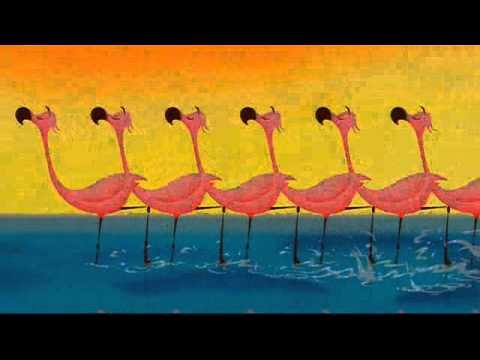
Watch a performance of Saint-Saëns The Carnival of the Animals from Disney's "Fantasia 2000."

Georges Bizet
Georges Bizet
October 25, 1838 - June 03, 1875
Georges Bizet was born in Paris, France. Both his parents were musicians, and they actually wanted their son to become a composer when he grew up! Bizet loved music, but he also loved to read books. His parents wound up hiding his books so that he would spend more time on his music.
When Georges was 10 years old, his father enrolled him in the Paris Conservatory. While he was there, he wrote his only symphony, but it wasn't performed until many years after he died. Bizet graduated from the Conservatory with awards in both composition and piano.
Bizet also composed operas. His most famous opera is Carmen. When Carmen first opened in Paris, the reviews were terrible. Many critics said there were no good tunes in it, so audiences stayed away.
In the middle of the night during the first round of Carmen performances, Bizet died. He was only 36. Four months later, Carmen opened in Vienna, Austria, and was a smash hit. It is now one of the most popular operas ever written. Bizet never knew that audiences would come to consider it his masterpiece.
Bizet was also very good at writing dramatic music. The music he wrote for the play L'Arlesienne (The Girl from Arles) is still enjoyed today. A farandole is a dance from Provence, an area in Southern France. Bizet used two traditional French tunes in his “Farandole.” One is a dance; the other is the “March of the Kings,” a traditional French Christmas Carol.
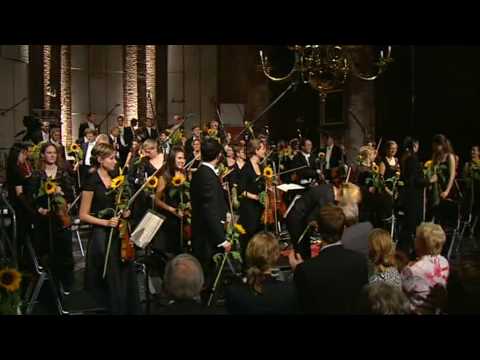
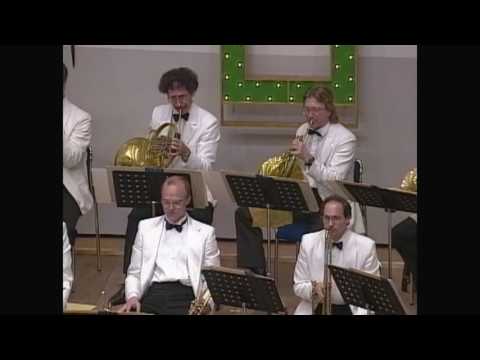
Deutsch-Niederländische KammerPhilharmonie orchestra in Germany playing L'Arlésienne Suite: Farandole.Bizet composed this in 1872 (Romantic Period)
Deutsch-Niederländische KammerPhilharmonie orchestra in Germany playing L'Arlésienne Suite: Farandole.
Deutsch-Niederländische KammerPhilharmonie orchestra in Germany playing L'Arlésienne Suite: Farandole.
Bizet composed this in 1872 (Romantic Period)
Bizet composed this in 1872 (Romantic Period)
Listening Activity
Listening Activity
Writing Activity
Writing Activity
It's fun to imagine a story while listening to music. As you hear the different instruments and sections of the music, think about what could be happening in a story. Hear is an example story for Fandole by Bizet. Use this example to write your own story for this music. Or you could draw pictures to go along with the Snow Fun story.
Snow Fun
Snow Fun
1. Bailey and Emily are going to go for a sled ride. The music begins with a march. Can you hear them march up the long hill? 2. Emily goes first. She glides down the hill to a new tune. What fun! 3. Bailey joins in and follows Emily down the hill. Can you hear both melodies? They are following each other. 4. Down at the bottom of the hill, a snow couple have a musical conversation. 5. The kids and the snowman play together. Can you hear both melodies at the same time? Listen for the cymbals as they play in the snow.

Johannes Brahms
Johannes Brahms
May 07, 1833 - April 03, 1897
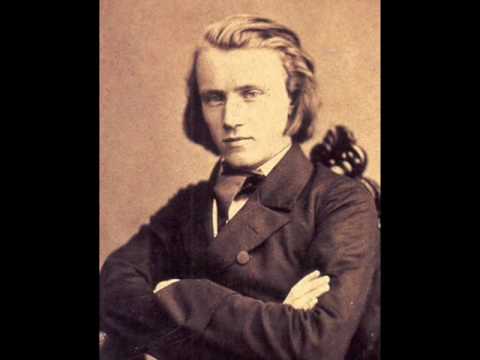
Johannes Brahms was born in 1833 in the German city of Hamburg. His father was a musician who played several instruments. Brahms loved music, too. By the time he was six, he'd invented his own system for writing notes down on a page. Of course, he took instrument lessons, learning to play cello, horn, and piano. By the time he was ten, he was such a good pianist that he performed in public, as part of a chamber music concert. Brahms also loved books and read everything he could find including novels, poetry, and folk tales.
When Brahms was older, he toured as an accompanist, playing piano for a Hungarian violinist. That music -- and the gypsy bands Brahms heard later on when he traveled to Hungary -- inspired his Hungarian Dances, which were a hit with the public. He wrote 21 dances in all. The most famous one is the Hungarian Dance No. 5.
Many people considered Brahms to be the successor to Beethoven. For a long time, he didn't want to write a symphony, because he was afraid his work would not be as good as Beethoven's. Brahms ended up writing four symphonies, plus pieces in every musical form except opera. You may know one of his most famous pieces, the Lullaby.
In fact, Brahms became so famous, he is now known as one of the 3 B's -- Bach, Beethoven, and Brahms -- of classical music.




SCOTT JOPLIN
SCOTT JOPLIN








Page updated
Report abuse