Embedded Files
a selection of poems
a selection of poems
The delicate loveliness of the Spring blossoms all around us remind me of this beautifully observed and hopeful meditation by the American poet Robert Frost.
A Prayer In Spring
A Prayer In Spring
Oh, give us pleasure in the flowers to-day;
And give us not to think so far away
As the uncertain harvest; keep us here
All simply in the springing of the year.
Oh, give us pleasure in the orchard white,
Like nothing else by day, like ghosts by night;
And make us happy in the happy bees,
The swarm dilating round the perfect trees.
And make us happy in the darting bird
That suddenly above the bees is heard,
The meteor that thrusts in with needle bill,
And off a blossom in mid air stands still.
For this is love and nothing else is love,
The which it is reserved for God above
To sanctify to what far ends He will,
But which it only needs that we fulfil.
In the library with Malcolm Guite
In the library with Malcolm Guite
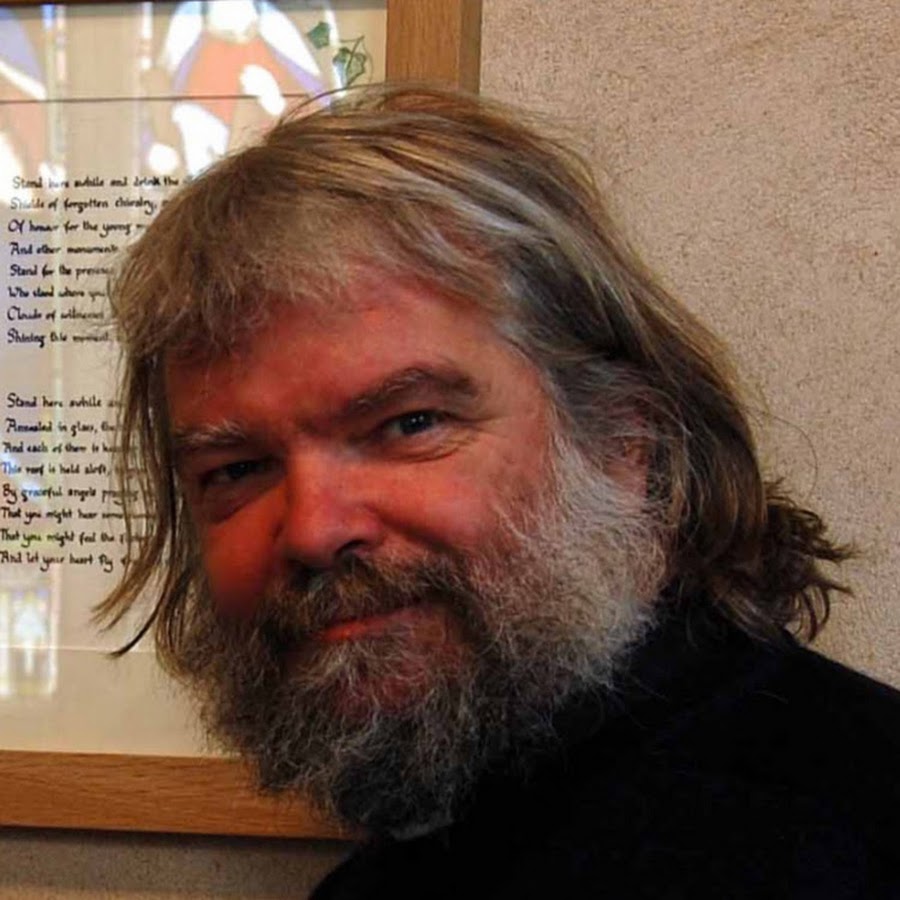
Like so many of us, poet, theologian, and singer-songwriter Malcolm Guite - a friend and one of Ann's mentors on her path to ordination - is missing his friends and his church family. So he's posting daily podcasts from his study in Linton, Cambridgeshire, where his wife, Maggie, is the Rector.
You can find Malcolm's reflections on the poems and poets he loves on his new YouTube channel. So if you'd like to sample some of Malcolm's chosen poems and reflections, click on the picture of Malcolm on the left.
Quarantine quatrains
Quarantine quatrains
During this period of lockdown, one of the books which Malcolm has been re-reading is 'The Rubaiyat of Omar Khayyam'. This has inspired him to write his own poems in the style of the famous translation by Edward Fitzgerald. A number are sombre reflections, or lamentations - which Rev. Deborah Perreau has reminded me are so important at times of distress, worry and sorrow.
Click on this link to read and hear Malcolm's complete quatrains.
From The Shepherd's Hut
From The Shepherd's Hut
I feel this is a very apt and moving poem for these times poem by Jonathan Bate. Jonathan is better known as a distinguished academic and biographer, but also a poet with a great love and appreciation for the natural world: a true Romantic (in the literary sense). It's from his recent collection The Shepherd's Hut, published by Unbound books, with delicate decorations by the well-known design and illustrator Emma Bridgewater. Click on the image to the below to read A Broken Sonnet for John Clare.
There's also a short video clip (below) of Jonathan talking about his shepherd's hut as a place for though and reflection, and also talking about the charitable foundation ReLit which Jonathan has started with his wife, the scholar and biographer ,Paula Byrne.
'Love's austere and lonely offices'
'Love's austere and lonely offices'
One of the effects of this present emergency is that we are all more aware and grateful for those who serve us - often in dangerous and unpleasant conditions, and frequently for low pay: nurses, doctors and care workers of course, pharmacists, too; but also shop workers, refuse collectors, workers in electricity and gas supply companies and many, many more. Here is a link to beautiful poem, by the American poet Robert Hayden that I first read in Malcolm Guite's anthology for Advent Waiting on The Word, about just such an overlooked carer: his father.

The Grain of Things
The Grain of Things
I've recently added links to the cantata The Girl From Aleppo, for which poet and author Kevin Crossley-Holland wrote the text. Kevin has also, very kindly, given permission to print his poem The Grain of Things. As a number of critics have observed, Kevin's poems of landscapes - especially of East Anglia - and of apparently everyday things, have a distinctively spiritual quality of celebration: an awareness of the sacred in the seemingly mundane.
This is, I think, one of his finest and most uplifting poems: a plain speaker's desiderata, or maybe a countryman's credo.
The Grain of Things
The Grain of Things
Beware of what’s uniform, lapidary, slick.
As if a twisting country lane
where shadows bow and curtsy
were to be avoided
because of its green spine and blisters;
or it were desirable
that literary translations should not sound
foreign and close to the originals.
Waxen-skinned fruit is apt
to taste less sweet than the pocked potato
and ruckled pomegranate.
Let me have about me
not members of the awkward squad
or fools so cussed they cannot compromise,
but friends who think, and say
what they think, not given to repeat
themselves with variations;
men and women with robust wordbanks
who deal in things no less than intuitions
and cast their cloaks before the beautiful.
Salt-milled stone has its place.
Oil has its place.
Likewise the assembly line.
And no, I have no wish to be abraded
when I am low in spirits
or to listen to the litanies of the bigoted,
nor even to be pricked by the moustache
of an amorous woman!
But give me the gruff,
the honest stumble and crux -
the obstinate knot in the grain of things.
Page updated
Google Sites
Report abuse